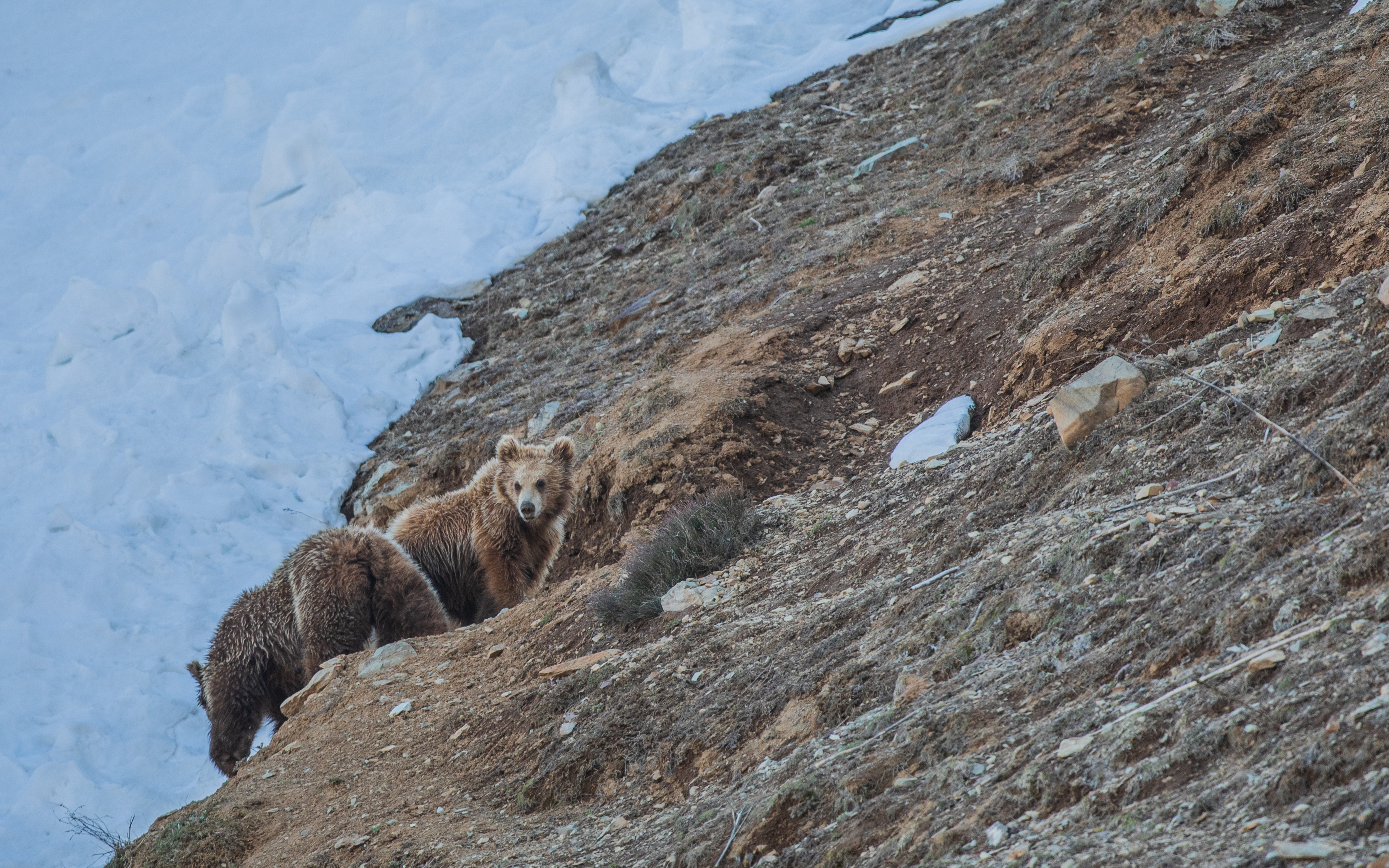

Know the Himalayan Brown Bear — The Dren-Mo of Ladakh
Everything you need to know about Ursus arctos isabellinus — one of the rarest and oldest brown bear lineages in the world, surviving in the cold deserts and rugged valleys of Ladakh.
The Himalayan brown bear (Ursus arctos isabellinus), locally called "Dren-Mo" in Ladakh and Tibet, is one of the rarest and oldest brown bear lineages in the world. These massive bears survive in the cold deserts and rugged mountains of Ladakh, especially around Drass, Suru, Mushkoh, and Zanskar valleys. Unlike forest bears, Himalayan brown bears are specially adapted to live in harsh, high-altitude environments with freezing winters, low oxygen, and rocky terrain. Their population is extremely small and isolated, making them one of India's most endangered mammals.
 Physical Characteristics & Adaptations
Why is the Himalayan brown bear so rare in Ladakh?
The Himalayan brown bear is extremely rare because it lives only in isolated mountain habitats across Ladakh, Kashmir, Himachal Pradesh, Pakistan, and parts of Central Asia. In India, only a few hundred are believed to survive, mostly in the western Himalayas and Trans-Himalayan region of Ladakh. Their numbers declined heavily due to hunting, habitat destruction, war zones near borders, and increasing human activity in the mountains. Today, Drass in Ladakh is considered one of the last strongholds for this ancient bear.
How do Himalayan brown bears survive the freezing climate of Ladakh?
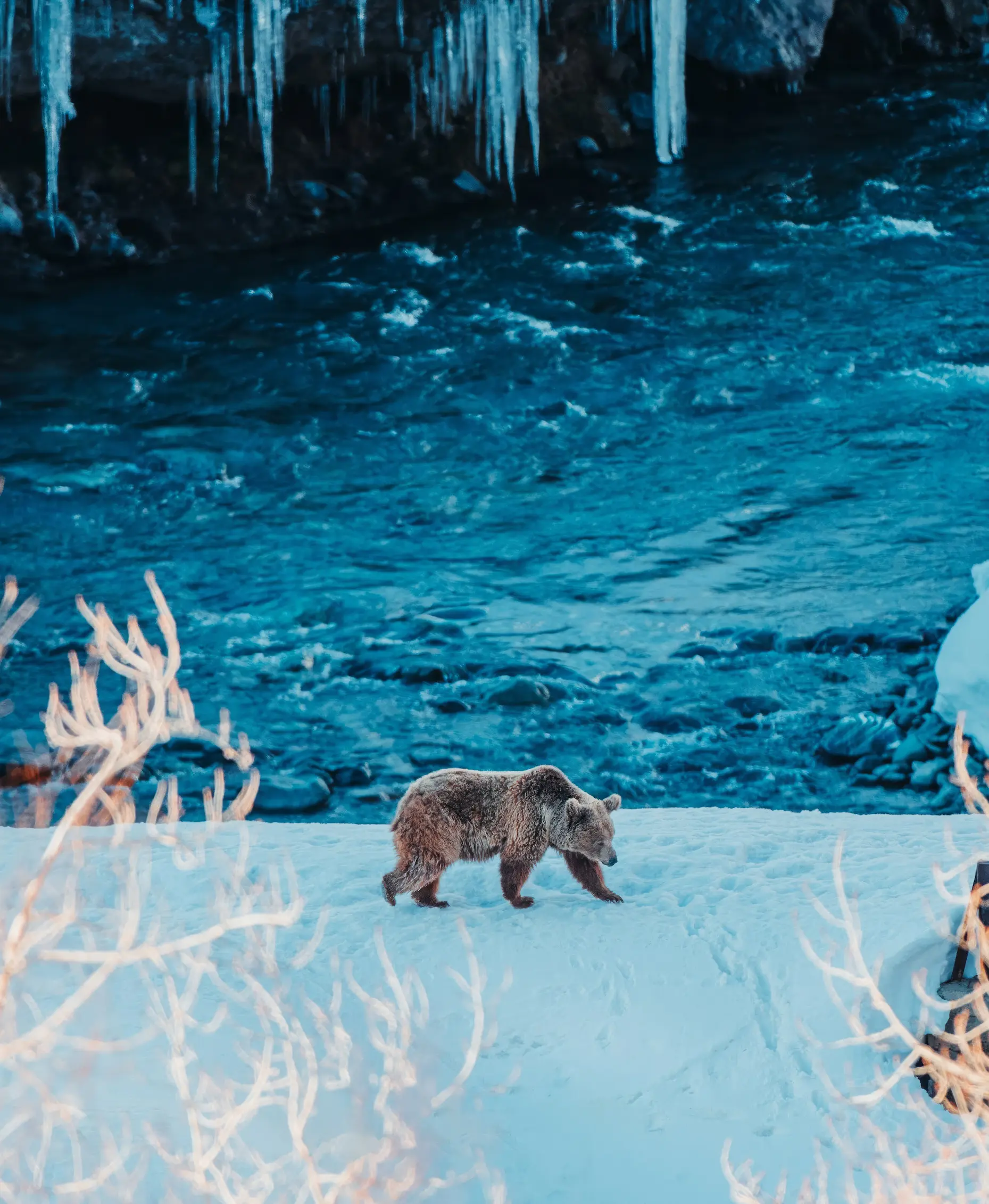
Himalayan brown bears survive extreme Himalayan winters using incredibly thick fur and large fat reserves stored during summer and autumn. Their dense woolly coat traps heat and protects them from temperatures that can drop below –30 °C in Ladakh. Before winter, the bears spend months eating constantly to build body fat, which acts like natural insulation during hibernation. They retreat into hidden dens beneath rocks, caves, or mountain slopes and sleep through much of the harsh winter season.
Why are Himalayan brown bears so huge and powerful?
Himalayan brown bears are among the largest predators of the Indian Himalayas. Adult males can weigh between 300-350 kg and stand nearly 7 feet tall on their hind legs. Their large shoulder hump is made of powerful muscles that help them dig for roots, tear apart soil, move rocks, and climb steep terrain. They have massive paws with long claws designed for digging and gripping mountain slopes.
How do Himalayan brown bears survive at high altitude with little oxygen?
These bears have powerful lungs and large chest cavities that allow them to take in more oxygen with every breath. Their bodies are naturally adapted to survive in thin mountain air above 3,000–5,000 metres. Unlike humans, they conserve energy by moving slowly and efficiently through the mountains.
Habitat, Behaviour & Diet
"Drass in Ladakh is considered one of the last strongholds for the Himalayan brown bear — an ancient lineage far older than most mammals alive today. Our trackers know these valleys intimately and have observed Dren-Mo for generations."
Where do Himalayan brown bears live in Ladakh?
In Ladakh, Himalayan brown bears are mostly found in Drass Valley, Mushkoh Valley, Suru Valley, Zanskar, and remote Kargil landscapes. They prefer alpine meadows, rocky slopes, river valleys, and cold desert terrain where food and shelter are available.
What do Himalayan brown bears eat in Ladakh?
Himalayan brown bears are omnivores, meaning they eat both plants and meat. Their diet includes alpine grasses, berries, roots, insects, marmots, pika, carrion, and occasionally livestock such as sheep and goats when natural food becomes scarce.
Why do Himalayan brown bears come near villages?
Himalayan brown bears enter villages mainly because their natural habitat and food sources are shrinking. Road construction, tourism, military activity, garbage, and livestock grazing are pushing bears closer to human settlements. This creates dangerous human-bear conflict in places around Drass, Mushkoh, and Suru valleys.
Why do Himalayan brown bears hibernate?
During winter, food almost completely disappears from Ladakh's mountains due to deep snow and freezing temperatures. To survive, Himalayan brown bears enter hibernation inside dens where their heartbeat and metabolism slow down drastically. They survive for months using stored body fat as energy.
How do mother bears protect their cubs?
Mother Himalayan brown bears are extremely protective of their cubs. They hide newborn babies inside deep mountain dens, caves, or rocky crevices far away from danger. Cubs are born tiny, blind, and helpless during winter hibernation and stay with their mother for nearly two to three years.
Threats, Safety & Conservation
Are Himalayan brown bears dangerous to humans?
Himalayan brown bears generally avoid humans whenever possible. Most encounters happen because bears enter villages searching for food. They may attack only if surprised, cornered, or protecting cubs. Unlike the snow leopard — which has never attacked a human — brown bears should be treated with respectful caution, particularly mother bears with young. Experienced local guides know the signs and behaviours that help travellers observe them safely from a distance.
What are the biggest threats to Himalayan brown bears?
The major threats include habitat destruction, climate change, human-bear conflict, illegal hunting, tourism pressure, garbage dependency, and livestock overgrazing. Climate change is especially dangerous because warming temperatures are shrinking alpine habitats and affecting hibernation patterns. As their food sources dwindle at higher altitudes, bears are increasingly forced down into human-occupied valleys — triggering conflict that often ends badly for the bear.
At Elite Expedition India, 20% of our annual profits fund ranger training, predator-proof livestock corrals for local herders, and community education — reducing human–wildlife conflict while creating sustainable livelihoods in brown bear territory.
Why are Himalayan brown bears important for Ladakh?
Himalayan brown bears play a major role in maintaining the fragile mountain ecosystem. They help control animal populations, spread seeds, and recycle nutrients through scavenging. They are also important for wildlife tourism and conservation awareness in Ladakh. As a keystone species, the health of the brown bear population reflects the health of the entire alpine ecosystem — making their protection critical for every other species that shares this landscape.
View Our Brown Bear PackageWritten by the People Who ❤️ Track Brown Bears for a Living
For more than 15 years, Elite Expedition India has been operating in the heart of Himalayan brown bear habitat in Ladakh. Every detail in this guide is based on real field experience, thousands of hours of observation, and deep respect for the Dren-Mo — the ancient bear of the mountains.
Responsible • Ethical • Passionate • High Success Rate
Ready to witness one in the wild?
Join our small-group Himalayan Brown Bear expedition in Drass — high sighting rates, full conservation accountability.
Travel with purpose into some of the world’s last wild places, where nature remains raw and untamed. Every expedition is thoughtfully designed to respect wildlife, support local communities, and contribute to conservation—ensuring your journey leaves a positive footprint long after the adventure ends.