
Know the Eurasian Lynx — The Ee of Ladakh
Everything you need to know about Lynx lynx isabellinus — one of three elusive wild felines of the Indian Trans-Himalayas, haunting the rocky cliffs and sea buckthorn valleys of Ladakh.
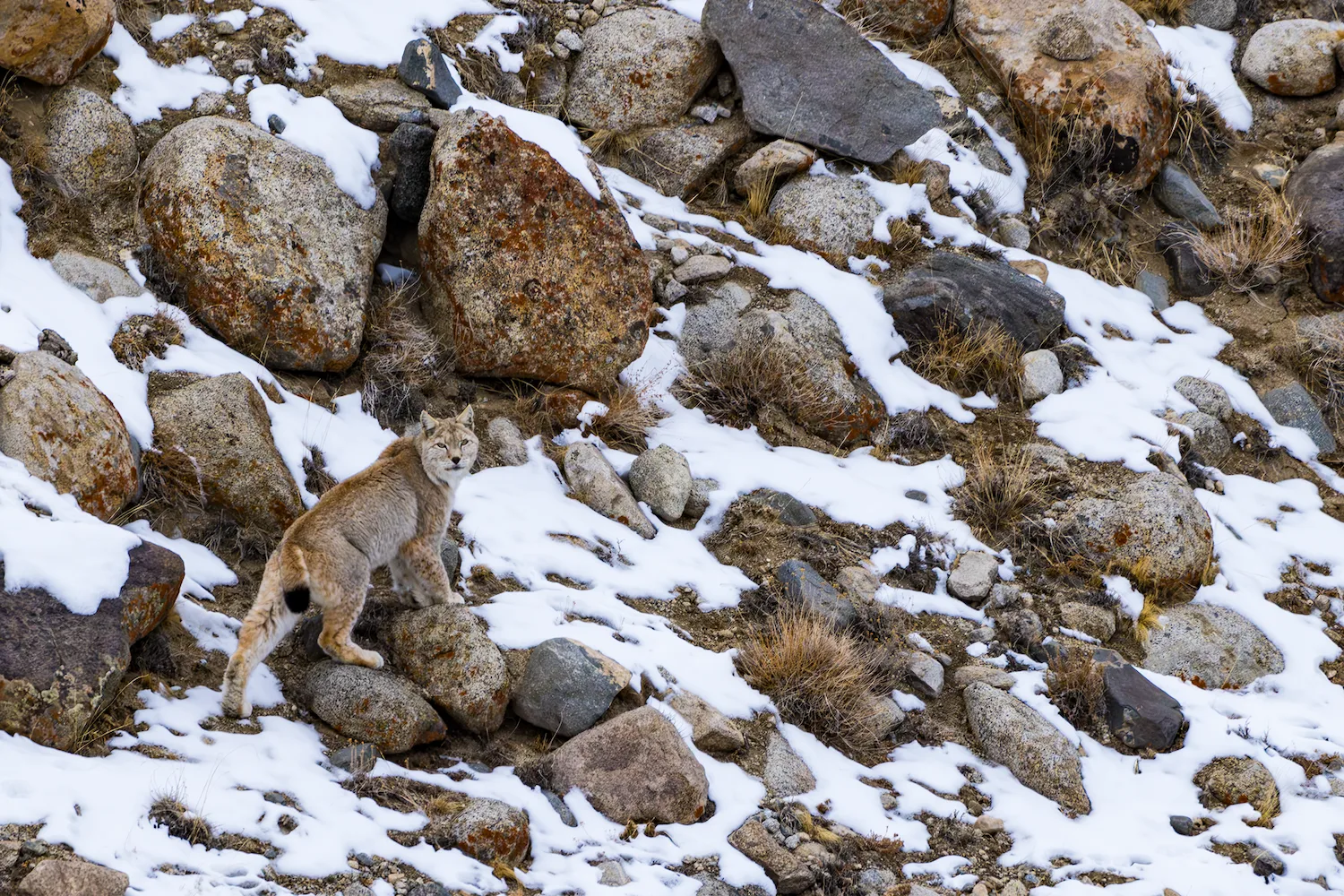
The Eurasian Lynx found in Ladakh belongs to a specific, unique geographic subspecies known as Lynx lynx isabellinus, often referred to locally as "Ee" or "Eeh" in the Ladakhi language. Alongside the snow leopard and Pallas's cat, it is one of the three elusive wild felines adapted to the extreme, high-altitude ecosystem of the Indian Trans-Himalayas. Primarily sighted within Nubra Valley, Hemis National Park (Rumbak area), Wari-la, Changthang, and parts of the Kargil division such as the Rangdum Valley, the Eurasian Lynx is one of Ladakh's most secretive and least-studied large predators.
 Physical Characteristics & Adaptations
What are the most distinctive physical features of the Eurasian Lynx?
The Eurasian Lynx is the tallest and biggest member of the lynx family, with a body length averaging 75–110 cm and standing about 55–75 cm tall at the shoulder. Males are up to 30% heavier than females. It is instantly recognisable by its prominent, long black hair tufts on the tips of its ears, which aid its highly precise hearing. It possesses a distinct wide facial ruff — longer hair framing the cheeks — and sharp, pale-coloured eyes adapted for keen sight. Its tail is unusually short and "bobbed", completely black at the tip. Its large, wide, heavily furred paws function naturally like snowshoes, distributing the cat's weight to prevent it from sinking into deep winter snow.
What terrain does the Eurasian Lynx prefer in Ladakh, and how high does it live?
The Eurasian Lynx inhabits elevations ranging from 3,500 to 5,200 metres above sea level. It thrives in barren, relatively open, sea buckthorn bush-covered rocky mountainous plateaus, rugged cliffs, and boulder-strewn landscapes. It relies heavily on high-altitude scrublands — particularly the dense thickets of sea buckthorn bushes and juniper patches — for concealment, shelter, and resting. This is precisely why valleys like Nubra, Rumbak, Wari-la, and Rangdum are among the most reliable places to look for it.
How does the Eurasian Lynx's coat change with the seasons?
The Eurasian Lynx has one of the most dramatic seasonal coat transformations of any wild cat in Ladakh. In summer, it wears a thinner, pale yellowish-brown, sandy or isabelline (greyish-yellow) coat that is virtually unmarked or has very faint spots — providing perfect camouflage against Ladakh's barren rocks. In winter, this transforms into an incredibly dense, soft silver-grey coat with hair up to 10 cm long, built to withstand temperatures dropping below –30°C.
Behaviour, Territory & Hunting
"The Nubra Valley, Hemis National Park's Rumbak area, and Rangdum Valley hold some of the most reliable Eurasian Lynx habitat in all of India. Our trackers have followed 'Ee' across Indus and Shyok river valleys for many seasons."
How large is the Eurasian Lynx's territory, and how does it communicate?
The Eurasian Lynx is strongly solitary and territorial. It patrols vast home ranges that can span dozens to hundreds of square kilometres depending on prey density. Radio-telemetry tracking has shown an individual moving well over 200 km across rugged ranges like the Indus and Shyok river valleys within just six months. It constantly patrols routine pathways, marking territory boundaries using urine, faeces, and scent glands to deter rivals. The lynx is crepuscular to nocturnal — most active during the twilight hours of early morning and late evening.
How does the Eurasian Lynx hunt, and what does it prey on?
The Eurasian Lynx is a stealthy, patient hunter. It uses rocky outcrops and shrub cover to approach targets invisibly, finishing the hunt with a powerful, sudden spring. Its primary wild diet consists of small to medium mammals — including the Tibetan woolly hare, marmots, rodents, and mountain birds like the snow partridge and snowcock. It is also capable of bringing down ungulates three to four times its own size, such as juvenile or female ibex, Ladakhi urial, and blue sheep (bharal). When wild prey is scarce, it occasionally infiltrates local corrals, killing domestic sheep and goats, which creates serious tension with local Himalayan herders.
 Reproduction, Cubs & Conservation
When do Eurasian Lynx mate, and how are cubs raised?
Breeding occurs exclusively once a year in late winter or early spring, typically February to April. Vocalisations increase during this period to help solitary individuals locate mates across vast mountain territories. The gestation period lasts approximately 70 to 80 days. Females give birth in highly secluded, safe spaces — deep rocky crevices, caves, or thick brush. A litter typically yields 1 to 4 cubs, born blind and completely helpless, depending entirely on the mother's milk. The father plays no role in raising the young. Cubs begin exploring outside the den around 6 to 7 weeks of age, start eating solid meat at 2–3 months, and hunt alongside their mother until they disperse to find their own territory at around 10 months old.
What are the biggest threats to the Eurasian Lynx in Ladakh?
The Eurasian Lynx in Ladakh faces several serious threats. Habitat loss from expanding human settlements, road construction cutting through prime habitat, and stray dogs are among the most immediate dangers. A significant lack of research means their exact numbers remain unknown. Additionally, because the lynx sometimes enters villages to kill domestic sheep and goats, it faces dangerous conflict with local livestock herders who try to protect their animals — retaliatory persecution being one of the most direct threats to individual animals in key areas like Nubra and Rumbak.
At Elite Expedition India, 20% of our annual profits fund ranger training, predator-proof livestock corrals for local herders, and community education — reducing human–wildlife conflict while creating sustainable livelihoods in Eurasian Lynx territory.
What is the conservation status of the Eurasian Lynx in India?
The Eurasian Lynx in Ladakh is heavily protected by law under Schedule I of the Wildlife Protection Act — the highest level of protection available in India — because it is at high risk of local extinction. It shares this status with the snow leopard and tiger. Despite this legal protection, enforcement in remote mountain landscapes remains challenging, and the species is still severely under-researched compared to other large predators in India. Increased wildlife tourism with responsible operators is one of the most powerful tools for generating awareness and funding for this secretive cat's long-term survival.
View Our Lynx Expedition PackageWritten by the People Who ❤️ Track Eurasian Lynx for a Living
For more than 15 years, Elite Expedition India has been operating in the heart of Eurasian Lynx habitat in Ladakh. Every detail in this guide is based on real field experience, thousands of hours of observation, and deep respect for the Ee — the ghost cat of Ladakh's rocky valleys.
Responsible • Ethical • Passionate • High Success Rate
Ready to witness one in the wild?
Join our small-group Eurasian Lynx expedition — high sighting rates, full conservation accountability.
Travel with purpose into some of the world’s last wild places, where nature remains raw and untamed. Every expedition is thoughtfully designed to respect wildlife, support local communities, and contribute to conservation—ensuring your journey leaves a positive footprint long after the adventure ends.