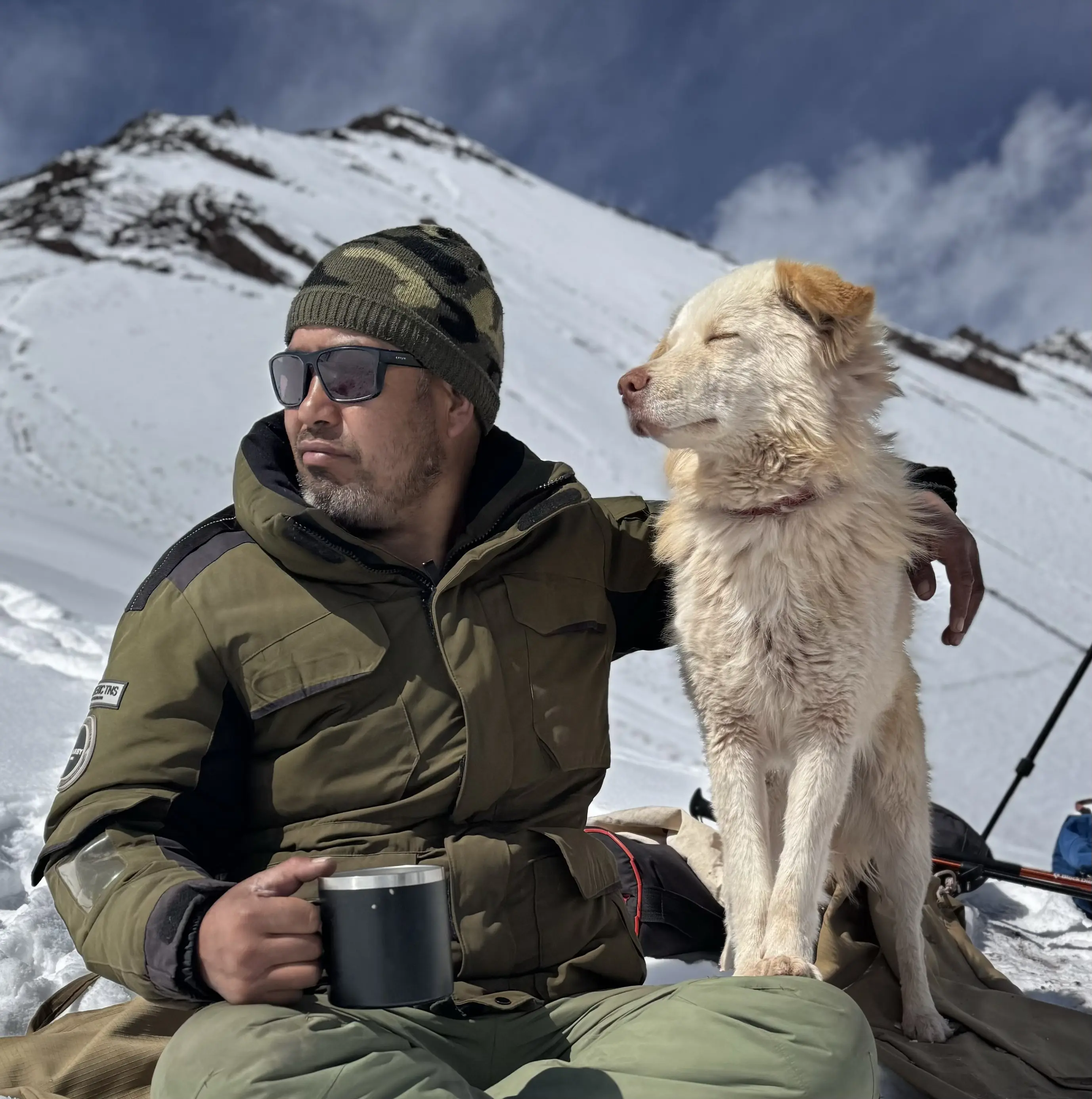

Julley! Here in the mountains of Ladakh and Zanskar, winter temperature easily drops to -25°C, making it the toughest place on earth for camera gear. As a local tracker who guides wildlife photographers across these frozen landscapes every year, I see expensive cameras and giant 600mm or more lenses fail all the time simply because people do not know how the extreme Himalayan freeze attacks electronics. In this guide I share our true field-tested mountain secrets to keep your gear working perfectly—from the indigenous tracking trick of using your own body heat to shield batteries, to protecting big telephoto glass from internal ice, and avoiding the dangerous indoor mist that can ruin your lens forever.
At Elite Expedition India, we see this happen to unprepared photographers all the time.
Extreme cold does not just freeze your fingers—it attacks your camera gear. Lithium-ion batteries drain in minutes, lenses fog up internally and plastic parts can snap like twigs.
If you want to bring home the shot of a lifetime, you must know how to protect your electronics. Here is our definitive field-tested guide to keeping your gear alive in the extreme cold.
1. Why the Cold Kills Your camera Battery Power ?
Inside your camera battery, chemicals move back and forth to create electricity. When the temperature drops to -20°C or less, this chemical reaction slows down to a crawl. Your camera thinks the battery is empty, even if it was just fully charged.
Your Cold-Weather Battery Rules:
- The Body Heat Trick: Never leave spare batteries in your backpack. Keep them inside your jacket, in a pocket right against your body. Your body heat keeps the chemicals warm and active.
- The Continuous Swap: Do not wait for a battery to drop to 0%. When your camera shows it is getting low, take it out and put it into your warm inner pocket. Put a fresh, warm battery into the camera. The cold battery will actually "recover" some power once it warms up against your body.
- Turn Off Extra Features: Turn off your camera's Wi-Fi, GPS, and image stabilisation if you do not absolutely need them. Use the optical viewfinder instead of the big LCD screen to save power.
2. The Condensation Trap- Hidden Killer.
Why is bringing your camera inside a warm room the most dangerous moment of the trip?
The biggest mistake photographers make happens after the shoot. When you bring a freezing cold camera inside a warm centrally heated room, a dining , or a homestay, moisture instantly forms on the cold glass and metal. This is called condensation.
This moisture will get inside your lens and camera body. Once inside, it can short-circuit the electronics or turn into mold (fungus) that ruins your expensive glass forever.
How to Prevent Condensation:
- The Ziploc Bag Trick: Before you walk into any warm space, put your camera and lenses inside an airtight plastic bag (like a large Ziploc bag) while you are still outside in the cold air.
- Let It Warm Up Slowly: Keep the camera inside the sealed bag for at least two hours after coming indoors. The moisture will form on the outside of the plastic bag, not on your gear. Your camera will warm up slowly and safely.
- Leave the Bag in the Pack: Alternatively, leave your camera inside your padded camera backpack, zip it completely shut and leave the bag in the coldest part of the room or entryway. Do not open it until the next morning.
3. Tripods and Plastics - Handling Frozen Hardware.
Will your tripod snap in the cold?
At -25°C, materials change their physical properties. Metal becomes painfully cold to touch with bare skin and plastics become incredibly brittle.
- Beware of Cheap Tripods: Cheap tripods use plastic clips to lock the legs. In extreme cold these clips can easily snap off when you try to open them. We highly recommend using carbon-fiber tripods with twist-locks, which handle the freeze much better.
- Wrap Your Tripod Legs: If your tripod has bare metal legs, wrap them in foam or specialized grip tape. Touching bare metal at -25°C can cause instant frostbite to your fingers.
- No Sudden Movements: Do not force any dials, buttons or levers if they feel stiff. Let them warm up gently.
4. Packing List Essentials for Sub-Zero Photography
Before you board your flight to the winter mountains, make sure you have these five cheap but life-saving items in your bag.
- Gallon-Sized Ziploc Bags: Buy the thick, heavy-duty ones with a strong zipper seal.
- Silica Gel Packets: Throw these into your camera bag and Ziploc bags to absorb any hidden moisture.
- Chemical Hand Warmers: You can activate these air-heated packets and wrap them around your camera's battery compartment using a rubber band.
- Thin Liner Gloves: You cannot operate a camera in giant winter mittens. Wear thin, touchscreen-compatible gloves underneath your heavy mittens so your skin is never exposed to the freezing air.
- USB Power Banks: Keep a heavy-duty power bank inside your inner jacket pocket to charge your camera batteries on the go via a USB cradle.
5. Giant Glass
How do giant super-telephoto lenses like 600mm, 800mm or 1200mm react to extreme freezing temperatures and how one should take care of it ?
If you are bringing a massive 600mm, 800mm or 1200mm heavy zoom lens to shoot wildlife from a distance, you need to treat it with extra care. Massive lenses have a lot of glass, metal and complex moving parts inside that react aggressively to -25°C temperatures.
The Slow-Freeze Effect on Autofocus
Inside a giant lens, there are tiny electric motors and lubricants (grease) that help the lens focus rapidly. In extreme cold, this internal grease becomes thick and sticky like cold honey.
- The Reaction: Your autofocus will slow down significantly. The lens might struggle to lock onto a moving snow leopard or the manual focus ring will feel very stiff and hard to turn.
- The Fix: Do not force the focus ring if it feels heavy. Keep the lens inside your insulated backpack until you are ready to shoot. When it is out in the open, try to pre-focus on a rock or ridge close to where you expect the animal to appear, so the motor doesn't have to work as hard.
Temperature Shock and Glass Distortion
Super-telephoto lenses contain multiple heavy layers of glass. If you take a lens from a warm vehicle or room and expose it to -25°C air instantly, the glass and the metal barrel will shrink at slightly different speeds.
- The Reaction: This sudden shift can cause temporary distortion in your images, making your photos look slightly blurry or out of focus, even if your camera says it is sharp.
- The Fix: Give your giant lens time to get used to the cold. When you arrive at your shooting spot, leave the lens in its bag outside for 15–20 minutes before you start shooting so the glass can cool down evenly.
Protecting the Front Element from Snow and Breath
A giant 800mm lens has a massive front glass element that acts like a magnet for falling snow, frost, and accidental moisture.
- Never Blow on the Lens: If you see dust or a snowflake on the glass, never blow on it with your mouth. Your warm breath will instantly freeze into a thick sheet of ice on the lens, which is incredibly difficult to remove safely in the field.
- Use a Lens Hood and Rocket Blower: Always keep the large lens hood attached. It protects the glass from falling snow and wind. Use a rubber air-blower (rocket blower) or a specialized camel-hair brush to gently sweep away loose snow or ice crystals.