

The Stray Dogs of Ladakh — A Growing Threat to Himalayan Wildlife
How feral dog packs are threatening Snow Leopards, Pallas's Cats, Lynx, Himalayan Brown Bears, wolves and local communities — and what Elite Expedition India is doing about it.
Ladakh is one of the most important wildlife landscapes in the world. Its rugged mountains, remote valleys and high-altitude deserts are home to some of Asia's rarest animals, including the Snow Leopard, Eurasian Lynx, Pallas's Cat, Himalayan Brown Bear, Tibetan Wolf, Blue Sheep (Bharal), Asiatic Ibex, Tibetan Gazelle and Black-necked Crane.
For decades, conservationists have worked hard to protect these species and their fragile habitats. However, a rapidly growing and largely overlooked problem is now threatening Ladakh's wildlife on an unprecedented scale: the explosion of stray and feral dog populations.
What was once a village-level issue has now become a major conservation crisis. Large packs of stray dogs are increasingly entering wildlife habitats, hunting wild animals, disturbing breeding areas, spreading diseases and creating serious risks for both wildlife and people. Today, many conservationists consider stray dogs to be one of the biggest human-created threats to biodiversity in Ladakh.
 Why Is the Stray Dog Population Increasing in Ladakh?
Tourism and Food Waste
The increase in stray dogs is directly linked to human activities. Tourism in Ladakh has grown rapidly over the past two decades. While tourism brings important economic benefits, it has also resulted in increased food waste.
Hotels, guest houses, camps, restaurants and roadside eateries often generate large amounts of organic waste. Improper disposal of this waste provides a constant food source for stray dogs. When food is easily available, dogs survive harsh winters more successfully and reproduce in greater numbers.
Open Garbage Dumps
Many villages and settlements still struggle with proper waste management. Open dumping sites attract large numbers of stray dogs, allowing them to form packs and establish breeding populations.
Military Presence
Ladakh hosts numerous military installations because of its strategic location. Like any large human settlement, military bases generate food waste and garbage.
Where waste management is inadequate, stray dogs are attracted to these areas. Around some military camps, dog populations have increased significantly due to easy access to food.
Abandoned and Free-Roaming Dogs
Many domestic dogs are allowed to roam freely. Others are abandoned when owners can no longer care for them. These dogs often breed with stray populations and eventually become feral.
High Reproductive Rate
A female dog can produce multiple litters during her lifetime. In favourable conditions, a single female can give birth to as many as 10–14 puppies in a year through multiple breeding cycles.
Because food is readily available around human settlements, many puppies survive and reach adulthood, causing populations to grow rapidly.
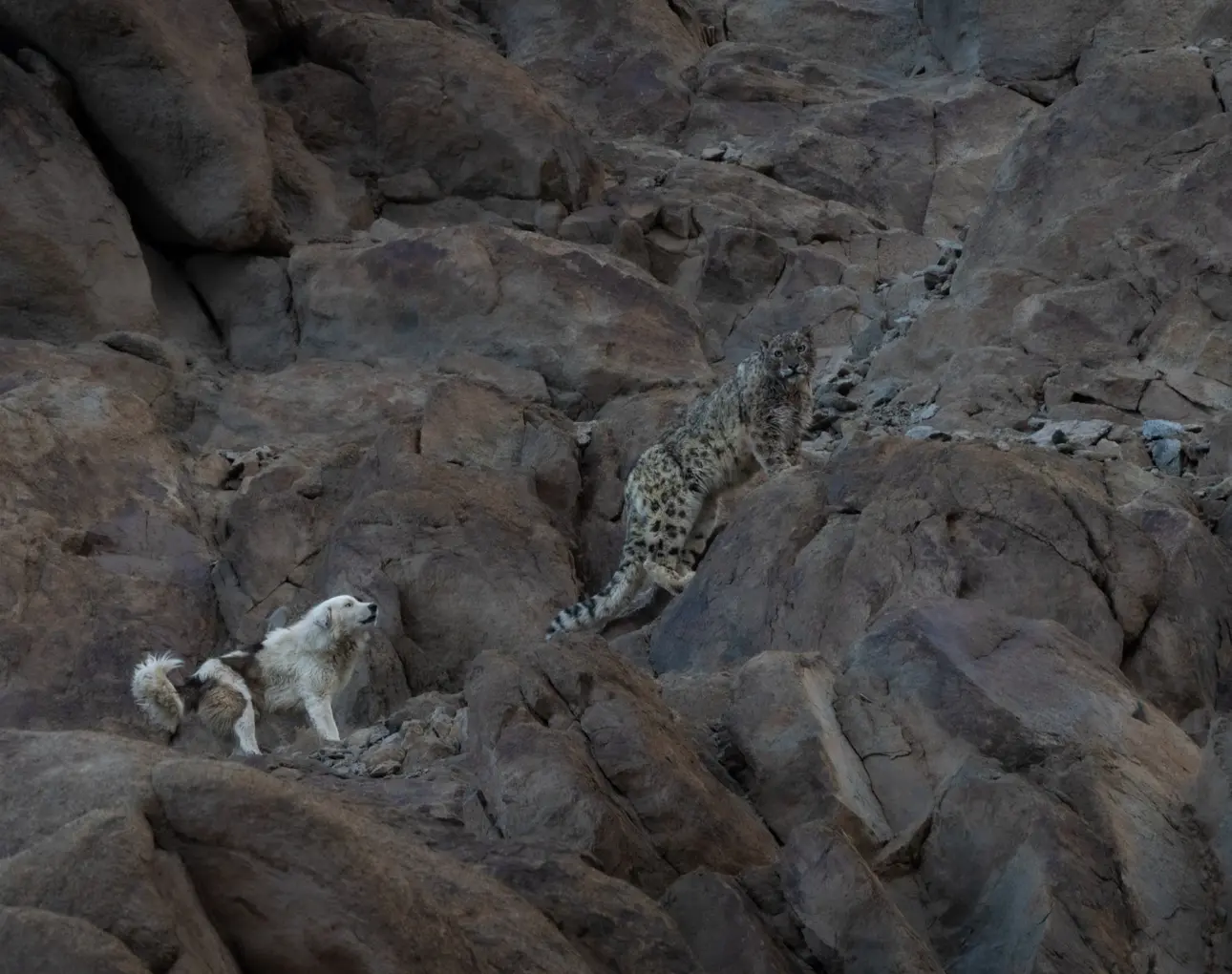 How Stray Dogs Become Efficient Predators
From Scavengers to Pack Hunters
Many people assume stray dogs survive only by scavenging on garbage. Unfortunately this is no longer the case.
Across Ladakh, feral dogs have learned to hunt cooperatively in packs. They chase wildlife over long distances, often exhausting their prey before attacking.
Unlike natural predators such as snow leopards and wolves, stray dogs are supported by human-generated food resources. Their numbers can therefore become far higher than what the ecosystem would naturally support. This creates an unnatural predation pressure on wildlife.
Every Year Hundreds of Wild Animals Are Killed
Local villagers, wildlife guides, conservationists and researchers regularly witness attacks by dog packs. Wild animals are often chased for several kilometres before being caught.
Animals frequently suffer:
- Severe injuries
- Broken limbs
- Stress and exhaustion
- Death from attacks
- Death from falls while escaping
Many attacks go undocumented because they occur in remote mountain areas. The true number of wildlife deaths caused by stray dogs is likely much higher than officially recorded.
Species Under Threat
"Today, many conservationists consider stray dogs to be one of the biggest human-created threats to biodiversity in Ladakh."
Threat to Snow Leopards
The Snow Leopard is Ladakh's most iconic wildlife species and one of the world's most endangered big cats. Stray dogs threaten snow leopards in several ways.
Competition for Prey. Dogs hunt many of the same animals that snow leopards rely upon: Blue Sheep (Bharal), Asiatic Ibex, Marmots, and young ungulates. As prey populations decline, snow leopards must travel farther to find food.
Disturbance of Habitat. Large dog packs frequently move through valleys and ridge-lines used by snow leopards. This disturbance can force snow leopards away from key hunting and breeding areas.
Threat to Cubs. Snow leopard cubs are vulnerable to attacks by packs of dogs.
Disease Transmission. Stray dogs can carry diseases such as rabies and canine distemper, both of which can threaten wild carnivore populations.
Threat to Pallas's Cat
The Pallas's Cat is one of the most elusive wild cats in Asia. Small, secretive, and naturally rare, Pallas's cats are extremely vulnerable to dog attacks.
Dogs can: kill adults, kill kittens, disturb denning sites, and compete for prey. Because Pallas's cats exist at very low densities, even a few deaths can have serious consequences for local populations.
Threat to Eurasian Lynx
The Eurasian Lynx is another rare predator of Ladakh. Although larger than a Pallas's cat, lynx are solitary hunters and can be displaced by large dog packs.
Dogs compete with lynx for prey and reduce the availability of secure habitat near villages and wildlife corridors.
Threat to Himalayan Brown Bears
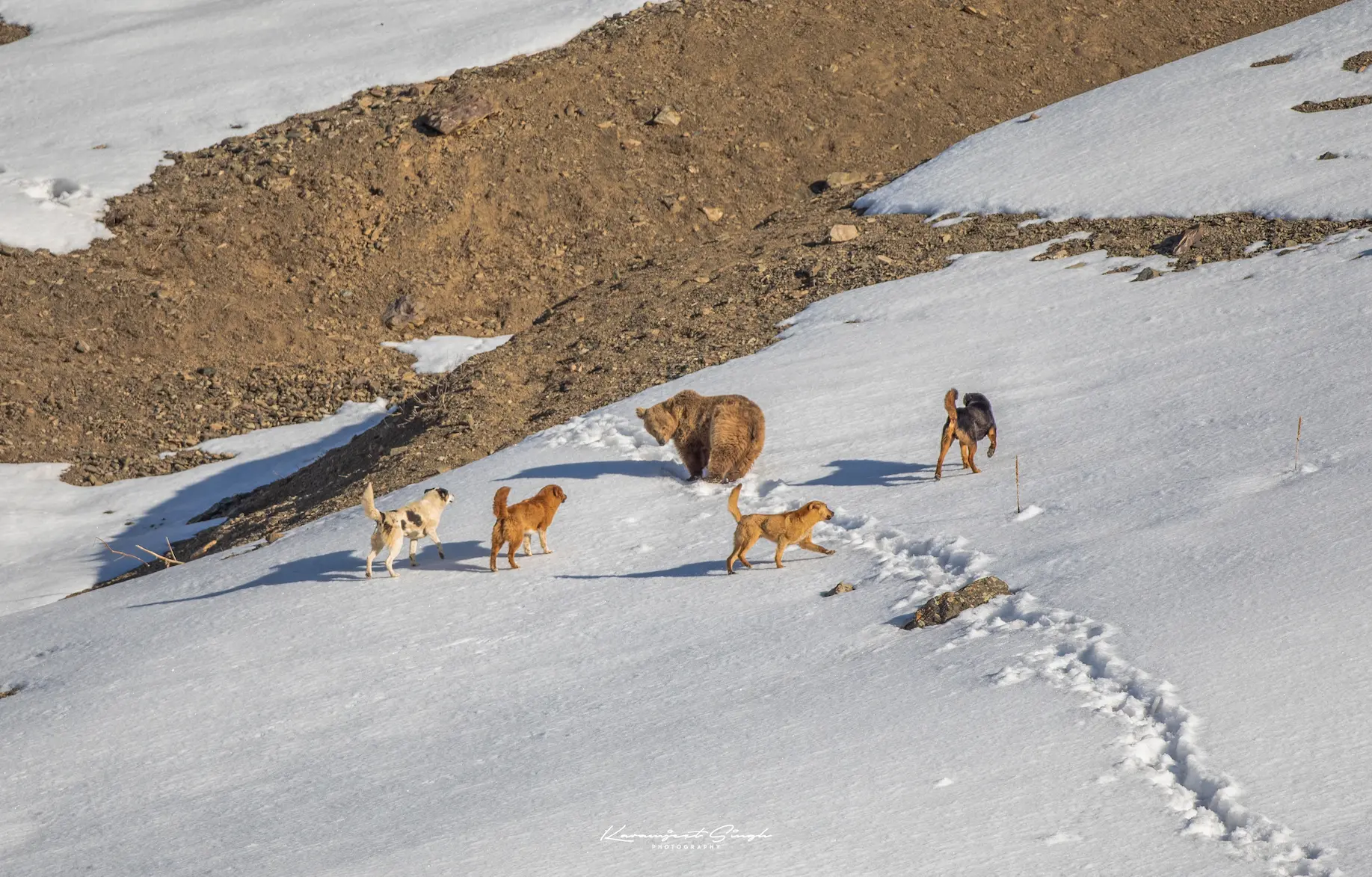
The Himalayan Brown Bear is one of India's rarest mammals. Repeated harassment from dog packs forces bears away from feeding areas and causes unnecessary stress.
Young bears are particularly vulnerable and may be injured or killed. With already small populations remaining in Ladakh, every loss is significant.
Impact on Herbivores
The greatest ecological damage may be occurring among prey species. Common victims include: Blue Sheep (Bharal), Asiatic Ibex, Tibetan Gazelle, Himalayan Hare, Marmots, and young wild ungulates.
These animals form the foundation of Ladakh's ecosystem. When prey populations decline, all native predators suffer.
The Emerging Threat of Dog-Wolf Hybrids (Khepshang)
Another growing concern in Ladakh is the interbreeding of stray dogs and wild wolves. Locally known as "Khepshang," these hybrids inherit characteristics from both species.
They often display: greater size and strength, increased adaptability, reduced fear of humans, and enhanced hunting ability. Many herders report that these hybrids can be particularly dangerous to livestock.
Hybridization also threatens the genetic purity of Ladakh's wild wolf populations, creating long-term conservation concerns. As stray dog numbers continue to increase, opportunities for interbreeding with wolves may also increase.
Threat to Humans
The stray dog crisis is not only a wildlife issue. Large dog packs can also: attack livestock, chase children, cause road accidents, increase dog bite incidents, and spread diseases including rabies.
Many villages across Ladakh have reported growing concerns about aggressive dog behavior and people already got killed by these feral dogs.
 Conservation Response & Solutions
What Are Government Agencies Doing?
The Administration of Ladakh and the Department of Animal Husbandry have implemented several measures including: Animal Birth Control (ABC) programmes, sterilization campaigns, vaccination drives, population monitoring, and public awareness initiatives.
While these efforts have achieved progress in some areas, conservationists believe greater investment and wider coverage are needed, particularly in remote wildlife habitats.
What Are NGOs Doing?
Several conservation organizations are working to address the problem through: dog sterilization programmes, community education, waste management awareness, wildlife monitoring, and conservation outreach.
Most experts agree that sterilization and responsible waste management offer the most humane and effective long-term solutions.
How Elite Expedition India Is Helping
At Elite Expedition India, wildlife conservation is more than a responsibility — it is a commitment. As a wildlife-focused expedition company operating in Ladakh's most important wildlife habitats, we witness firsthand the impact that stray dogs are having on endangered species.
For this reason, we actively support conservation efforts by donating 20% of profit, aimed at reducing stray dog populations in a humane and sustainable manner. Our initiatives include:
Dog Sterilization Campaigns. We support and conduct dog sterilization programmes in important wildlife regions to reduce future population growth.
Community Awareness Programmes. We work with local communities and villagers to promote responsible dog ownership, sterilization awareness, wildlife conservation, and better waste management practices.
Conservation Education. Through our wildlife expeditions, we educate visitors about the challenges facing Ladakh's wildlife and encourage responsible tourism practices.
Supporting Long-Term Solutions. We believe that meaningful conservation can only be achieved through cooperation between local communities, government agencies, conservation organizations and responsible tourism operators.

At Elite Expedition India, 20% of our annual profits fund ranger training, predator-proof livestock corrals for local herders, stray dog sterilisation programs, and community education — reducing human–wildlife conflict while creating sustainable livelihoods in snow leopard territory.
The Way Forward
The stray dog crisis in Ladakh is a human-created problem that requires immediate attention. Without action, increasing dog populations will continue to threaten snow leopards, lynx, Pallas's cats, brown bears, wolves, wild herbivores, birds, livestock and local communities.
The solution is not cruelty — it is responsible management. This includes:
- Large-scale sterilization programmes
- Improved waste management
- Responsible tourism
- Better control of food waste
- Community participation
- Scientific monitoring
- Public awareness
At Elite Expedition India, we believe every species has a role in maintaining Ladakh's unique ecosystem. Protecting snow leopards alone is not enough. We must also protect the prey species they depend upon, the habitats they inhabit and the ecological balance that sustains life across the Himalaya.
The future of Ladakh's wildlife depends on the decisions we make today. Together, we can ensure that future generations continue to experience a wild and thriving Himalaya.
Written by the People Who ❤️ Protect Ladakh's Wildlife for a Living
For more than 15 years, Elite Expedition India has been operating in the heart of Ladakh's wildlife habitat. Every detail in this guide is based on real field experience, thousands of hours of observation, and deep respect for every species that calls these mountains home.
Responsible • Ethical • Passionate • High Success Rate
Help us protect Ladakh's wildlife.
Expert-led winter expeditions — small groups, high sighting rates, full conservation accountability.
Travel with purpose into some of the world’s last wild places, where nature remains raw and untamed. Every expedition is thoughtfully designed to respect wildlife, support local communities, and contribute to conservation—ensuring your journey leaves a positive footprint long after the adventure ends.