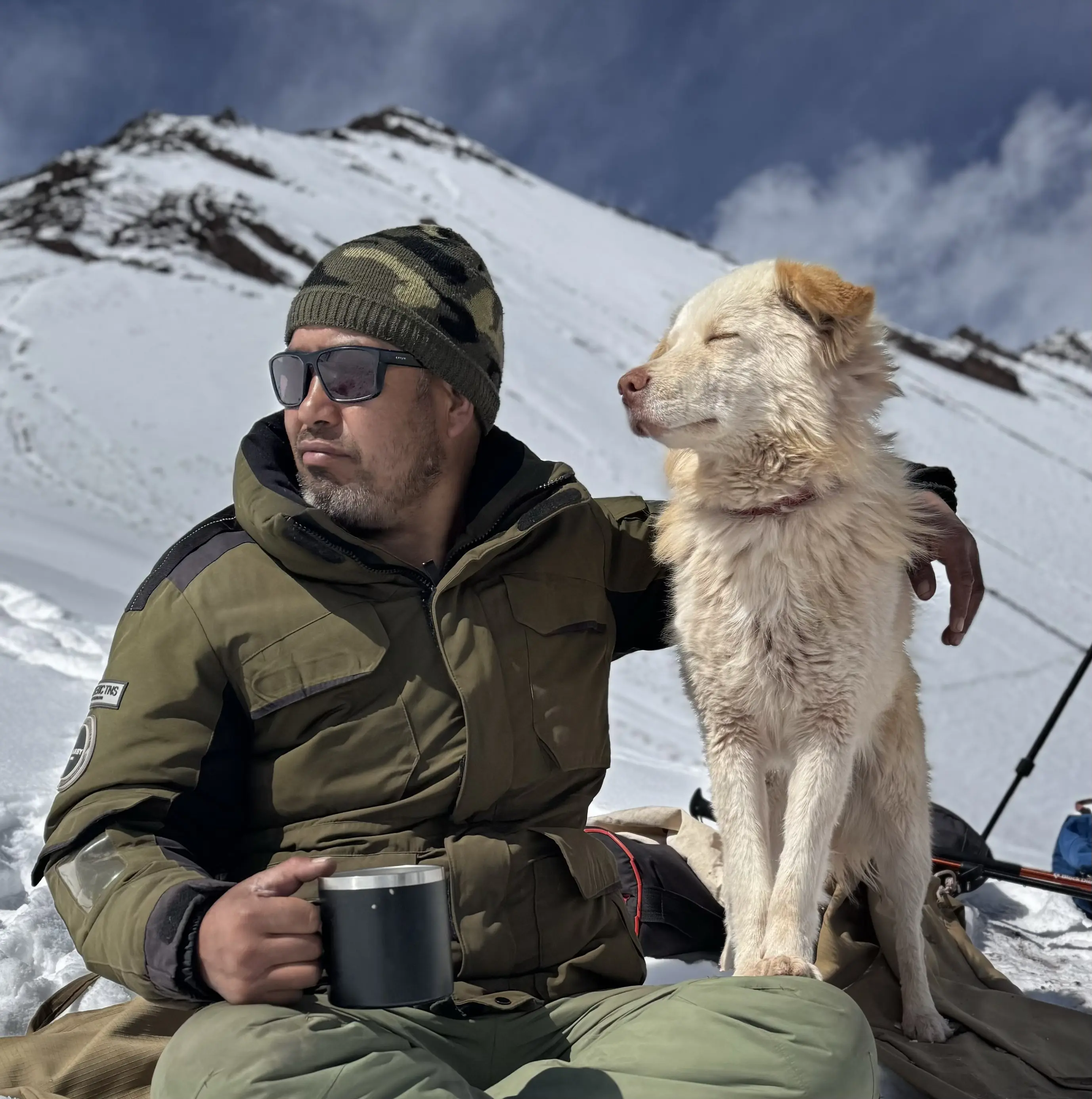

Go behind the lens with Elite Expedition India. Discover the intense physical toll, frozen gear and master tracking skills required to find the Ghost of the Mountains.Ever wondered how our tracking team finds a Snow Leopard completely hidden against grey limestone cliffs? It isn't luck. It’s the result of waking up at -25°C, enduring brutal windburn, fighting chronic 'scope headaches and operating on 40% less oxygen. Staring through a freezing scope for 6 hours straight at -25°C just to see a single twitch of a tail. Read the untold story of the incredible hardships and daily routine of Ladakh's local Snow Leopard trackers.
More Than Just a Wildlife Guide
For most visitors to Ladakh, a snow leopard sighting is a magical moment that lasts only a few minutes. They look through a spotting scope, admire the world's most elusive big cat, take photographs and celebrate their success. What they rarely see is the enormous effort that happens behind the scenes. The tracker who located that snow leopard may have spent years learning the mountains, countless winter days enduring freezing temperatures and thousands of hours studying wildlife behaviour. The life of a snow leopard tracker is not simply a job, it is a lifestyle built on patience, endurance and an intimate understanding of one of the harshest environments on Earth.
Living and Working at Extreme Altitude
Most snow leopard habitat in Ladakh lies between 4,000 and 5,500 meters above sea level. At these elevations, the air contains significantly less oxygen than at sea level, making even simple physical activities more demanding. Every winter morning begins with steep climbs up mountainsides before sunrise, often in -20 degree temperatures. A route that may seem manageable on a map can become exhausting due to the thin air. Breathing becomes harder, the heart works faster and the body tires more quickly. Even experienced local trackers who have spent their entire lives in Ladakh feel the strain after long days at high altitude. Constant exposure to these conditions places significant stress on the cardiovascular and respiratory systems throughout the tracking season.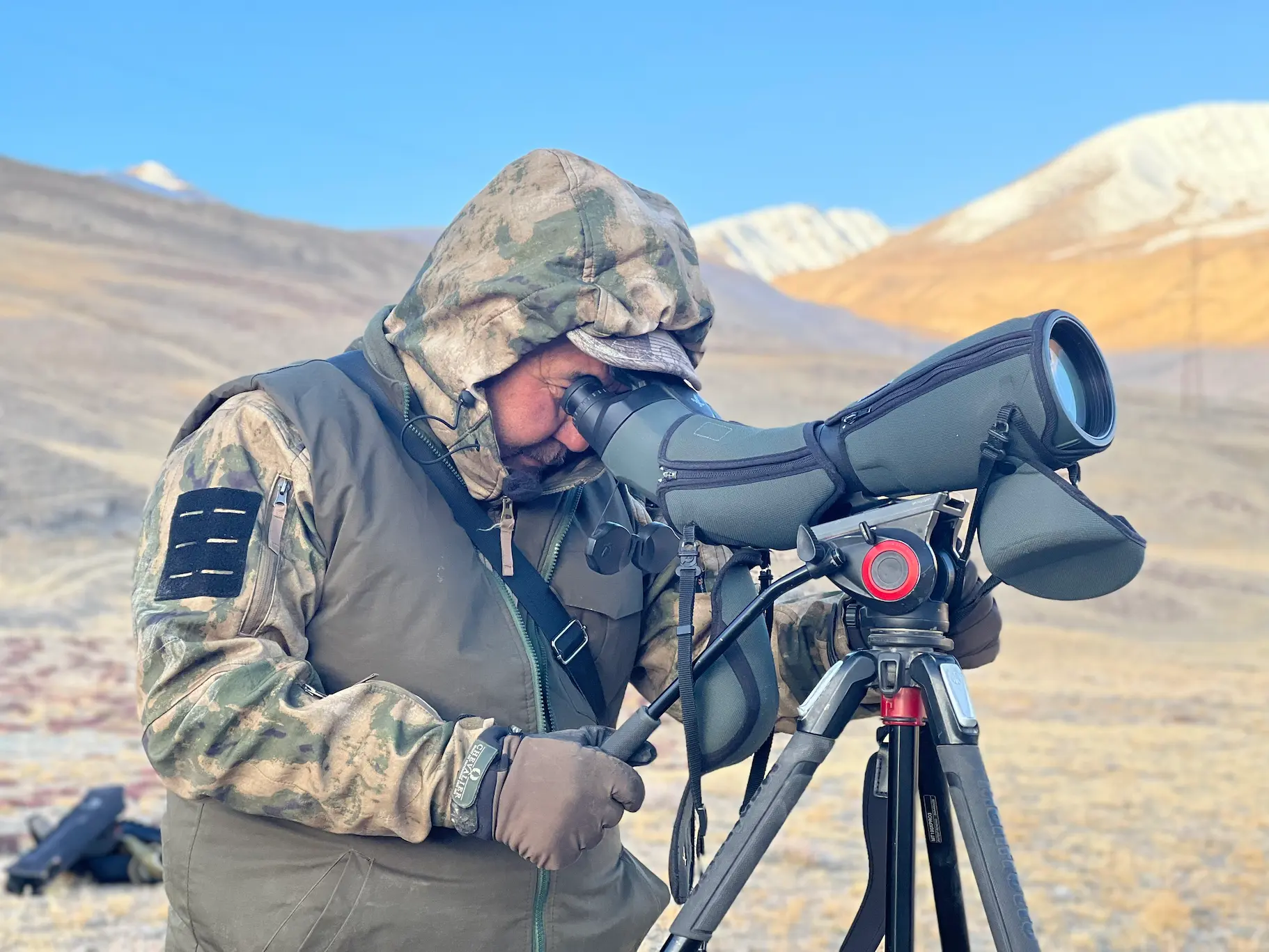
The Daily Search for the Grey Ghost
Finding a snow leopard is often compared to searching for a ghost among mountains. The animal's grey coat perfectly blends with rocky cliffs and barren slopes, making it nearly invisible even when it is in plain sight. Rather than searching directly for the animal, trackers spend most of their time reading signs left behind in the landscape. They examine footprints in fresh snow, scent markings on rocks, scrape marks made with hind legs, prey remains and droppings. They also pay attention to ravens circling overhead, unusual movements of blue sheep and ibex and alarm calls from birds. Years of experience allow skilled trackers to predict where a snow leopard may appear long before they actually see it.
Endless Walking Across Dangerous Terrain
A significant part of a tracker's life involves walking through some of the most rugged terrain in the Himalayas. Unlike regular trekking routes, trackers often travel across unstable scree slopes, frozen riverbeds, steep ridges and rocky mountain faces. A single day may involve walking 10 kilometres while climbing hundreds or even thousands of meters in elevation. Every step requires concentration because loose rocks, hidden ice and steep drop-offs create constant hazards. Falls can result in serious injuries and help may be several hours away in these remote valleys. The physical effort required to cover such terrain day after day is one of the greatest challenges of the profession.
Carrying Heavy Equipment in Harsh Conditions
Modern wildlife tracking requires much more than good eyesight. A professional tracker often carries a spotting scope, tripod, binoculars, radio, camera equipment, batteries, food, water and emergency supplies. Together this equipment can weigh more than 15 kilograms. Carrying such loads at elevations above 4,000 meters dramatically increases fatigue and places additional stress on the knees, ankles, shoulders and back. Over years of work, many trackers develop chronic joint pain and muscular problems caused by the repeated strain of transporting equipment through difficult terrain.
Surviving Ladakh's Brutal Winter Temperatures
Winter temperatures in snow leopard habitat commonly fall below -20°C and can occasionally drop below -35°C. Unlike trekkers who remain active throughout the day, trackers often spend long periods sitting still behind spotting scopes while observing distant mountain slopes. Remaining motionless in such conditions can be even more challenging than hiking. Fingers gradually lose sensation, toes become numb, and facial skin is exposed to freezing winds for hours at a time. Many trackers experience cracked skin, bleeding fingertips, frost-nip and occasional frostbite during particularly severe winters. The cold becomes a constant companion throughout the tracking season.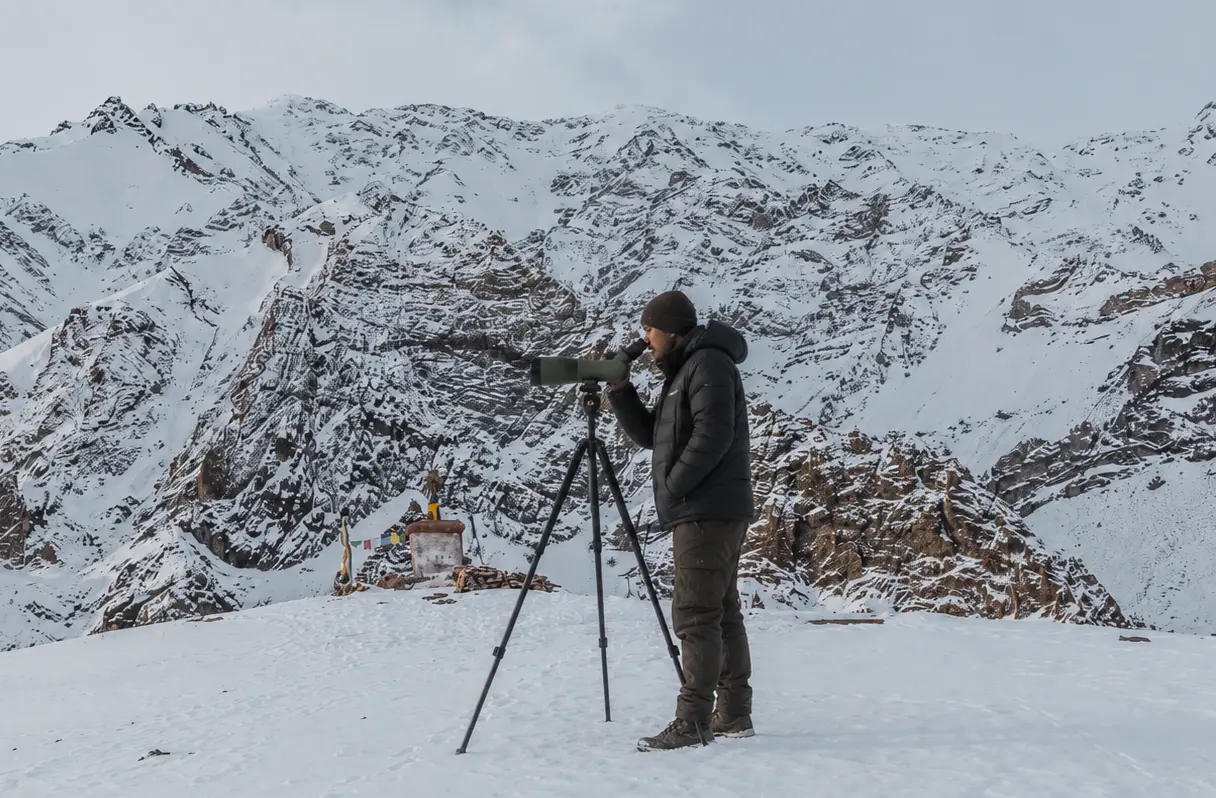
The Hidden Impact of Cold on the Human Body
Extreme cold affects nearly every aspect of a tracker's daily life. Batteries drain quickly, water bottles freeze solid, camera equipment becomes difficult to operate and even simple tasks such as adjusting a spotting scope can become challenging when fingers lose feeling. Muscles remain tight and stiff throughout the day, increasing the risk of strains and injuries. Constant exposure to freezing temperatures also reduces blood circulation in the hands and feet, sometimes causing long-term sensitivity to cold even during warmer seasons.
The Constant Battle Against Wind
Many experienced trackers believe that wind is often a greater challenge than cold itself. Strong Himalayan winds can dramatically increase heat loss and make already freezing temperatures feel much colder. Hours spent on exposed ridge lines can leave faces raw and chapped, lips cracked and ears painfully numb. The wind also makes it difficult to remain comfortable while observing wildlife, forcing trackers to maintain concentration despite constant physical discomfort.
Eye Strain and the Problem of "Scope Fatigue"
One of the least understood challenges of wildlife tracking is the strain placed on the eyes. Trackers spend many hours every day scanning mountainsides through binoculars and spotting scopes. They constantly shift focus between distant ridges and nearby terrain while searching for movement among rocks and shadows. This repetitive visual effort often leads to headaches, eye fatigue, blurred vision and dry eyes. Many veteran trackers suffer from chronic neck pain because of the awkward postures required when using spotting scopes for extended periods.
Snow Blindness and Intense Mountain Sunlight
Although winter temperatures are extremely cold, the sunlight in Ladakh can be surprisingly intense. Fresh snow reflects large amounts of ultraviolet radiation, creating powerful glare that can damage the eyes. Without proper sunglasses, trackers may develop snow blindness, a painful condition that causes temporary vision loss, burning sensations and excessive tearing. Because their profession depends entirely on their eyesight, protecting their eyes becomes one of the most important aspects of their daily routine.
Dehydration at High Altitude
Many people assume dehydration is only a concern in hot environments but it is a serious problem in Ladakh's cold deserts. The air is extremely dry and every breath at high altitude causes moisture loss from the body. Because cold temperatures suppress thirst, trackers often drink less water than they should. This can result in headaches, fatigue, poor concentration and reduced physical performance. Managing hydration becomes a daily challenge, especially during long hours spent away from villages and camps.
Mental Strength: The Most Important Skill
Perhaps the greatest challenge of tracking snow leopards is psychological rather than physical. A tracker may spend several days scanning mountains without seeing a single snow leopard. There are times when heavy snowfall erases tracks, weather conditions limit visibility and wildlife remains hidden. Success often comes only after long periods of failure. Maintaining focus, motivation and patience under these circumstances requires exceptional mental resilience. The ability to continue searching despite repeated disappointments separates experienced trackers from beginners.
Isolation in Remote Himalayan Valleys
During winter expeditions, trackers often spend weeks in remote valleys far from towns and modern comforts. Mobile phone coverage may be unavailable, internet access is limited and roads can become blocked by snow. Long periods away from family and friends can create feelings of loneliness and isolation. While many trackers develop a deep appreciation for mountain life, the psychological impact of spending extended periods in harsh and isolated environments should not be underestimated.
Tracking Pallas's Cats: A Different Kind of Challenge
The Pallas's cat is often considered even more difficult to find than a snow leopard. Much smaller in size and perfectly camouflaged against rocky terrain, it can remain completely motionless for long periods. Trackers searching for Pallas's cats rely on detailed knowledge of rocky outcrops, burrows and hunting grounds. Sightings are often brief and unpredictable, requiring enormous patience and a keen eye for subtle movement among the rocks.
Tracking Eurasian Lynx in Ladakh
The Eurasian lynx presents a unique set of challenges. Unlike snow leopards, lynx are often active during dawn, dusk, and nighttime hours. They move silently through valleys and can disappear into cover within seconds. Trackers frequently rely on footprints, prey remains and other signs left in the snow. Because direct sightings are rare, following tracks over long distances often becomes the most effective way of locating these elusive cats.
Long-Term Effects on a Tracker's Body
Years of working in extreme conditions inevitably leave their mark. Many veteran trackers suffer from chronic knee pain, damaged ankles, lower back problems, shoulder injuries and neck stiffness. Continuous exposure to intense sunlight and snow glare may contribute to vision problems later in life. Breathing cold, dry air year after year can also affect the respiratory system. Despite these physical consequences, many trackers continue working well into older age because of their deep passion for wildlife and the mountains.
Why Snow Leopard Trackers Are Among the World's Finest Wildlife Experts
A snow leopard tracker is far more than a guide who knows where animals live. They are mountain experts, naturalists, weather readers, survival specialists and wildlife observers all at the same time. Their knowledge is built through decades of experience rather than textbooks. Every successful sighting represents years of learning, countless kilometres walked and an extraordinary understanding of the Himalayan landscape. When a visitor finally sees a snow leopard resting on a distant cliff, they are witnessing the result of a lifetime dedicated to mastering one of the most challenging professions in the world of wildlife exploration.
Conclusion: The Human Story Behind Every Snow Leopard Sighting
The next time a snow leopard is spotted through a telescope in Ladakh, it is worth remembering the human story behind that moment. The sighting is not simply a matter of luck. It is the result of early mornings, freezing temperatures, high-altitude climbs, aching muscles, tired eyes and years of accumulated knowledge. Snow leopard trackers endure some of the harshest conditions on Earth to help others experience one of nature's greatest wildlife encounters. Their dedication, resilience and expertise are what transform an empty mountainside into a place where the Grey Ghost can finally be found.
Our Spotters: The Backbone of Every Snow Leopard Sighting
At Elite Expedition India, we believe that the success of a snow leopard expedition depends largely on the experience, dedication and well-being of our local spotting team. Snow leopard tracking in Ladakh is one of the most physically demanding wildlife activities in the world. Our spotters spend long hours in freezing temperatures, often above 4,500 meters, scanning vast mountain slopes in search of the elusive Grey Ghost. To ensure they can perform at their best, we provide them with some of the finest equipment available in the wildlife industry.
Our team uses premium Swarovski BTX 95 spotting scopes, widely regarded as the best wildlife observation system in the world. Unlike traditional spotting scopes, the BTX system features a dual-eyepiece design that allows viewing with both eyes simultaneously, significantly reducing eye fatigue, headaches and neck strain during long observation sessions. Combined with high-quality binoculars, our spotters are able to scan mountains efficiently while maintaining comfort throughout the day.
To protect our team from Ladakh's harsh winter conditions, we equip them with top-quality windproof and waterproof down jackets, insulated down trousers, premium thermal layers and high-performance mountain footwear. These carefully selected clothing systems allow our spotters to remain warm and comfortable while spending entire days in temperatures that often drop below -20°C. We also provide insulated flasks that keep water, tea or coffee hot for up to eight hours, helping them stay hydrated and maintain body temperature in the field.
Communication is another key factor behind our success. Our spotters carry reliable radios that allow constant communication between different observation points and our expedition base. This network enables real-time sharing of wildlife movements and sightings, allowing the team to react quickly whenever a snow leopard, lynx, or Pallas's cat is located. Multiple spotters working together across different valleys dramatically increase the chances of finding wildlife while minimising disturbance to the animals.
What truly sets Elite Expedition India apart is our team of highly experienced local spotters. Many have spent their entire lives in the mountains of Ladakh and possess an extraordinary understanding of snow leopard behaviour, movement patterns, and preferred habitats. Their knowledge comes not from books but from decades of firsthand experience in the field. They know every ridge, cliff, valley and travel corridor used by snow leopards throughout the region.
This combination of exceptional local expertise, premium equipment, dedicated field support and a well-coordinated spotting network has helped Elite Expedition India maintain 100% snow leopard sighting record for more than a decade. While wildlife sightings can never be guaranteed, our commitment to employing the best local talent and providing them with the best possible tools has consistently delivered one of the highest success rates in Ladakh.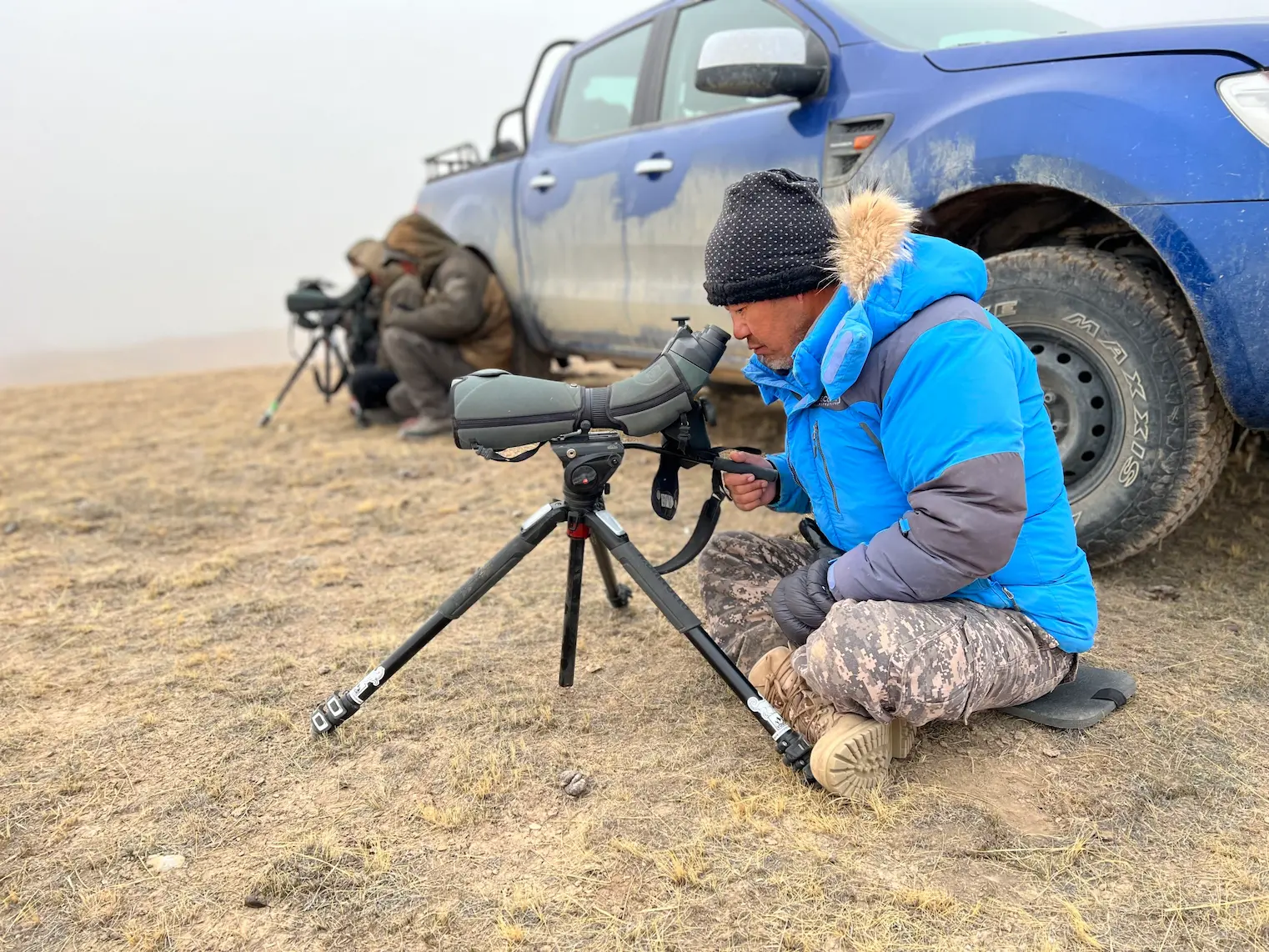
Ready to Witness the Ghost of the Mountains?
Reading about snow leopard tracking is just the beginning. The real magic happens when you’re standing in the silence of Ladakh’s high-altitude valleys, scanning the cliffs alongside expert trackers and finally spotting the elusive Grey Ghost in its natural habitat.
Curious about how this incredible process actually works? Explore our detailed guide on how snow leopard tracking actually works.
Behind every successful sighting is a team of passionate local experts who know these mountains like no one else. Get to know them on our team page.
If you're ready to experience this adventure for yourself, discover our carefully curated wildlife expeditions designed to give you the best chance of witnessing Ladakh’s rarest wildlife.
Your journey into the world of the snow leopard starts here.