
Chemday House — A Luxury Wildlife Lodge in Ladakh, Chemrey
Our Excusive partner property, Chemday House is a wildlife lodge in Ladakh built at the base of Wari La, just 20 minutes from Hemis National Park — purpose-placed as a base for Snow Leopard and Eurasian Lynx expeditions in the Trans-Himalayan wilderness.
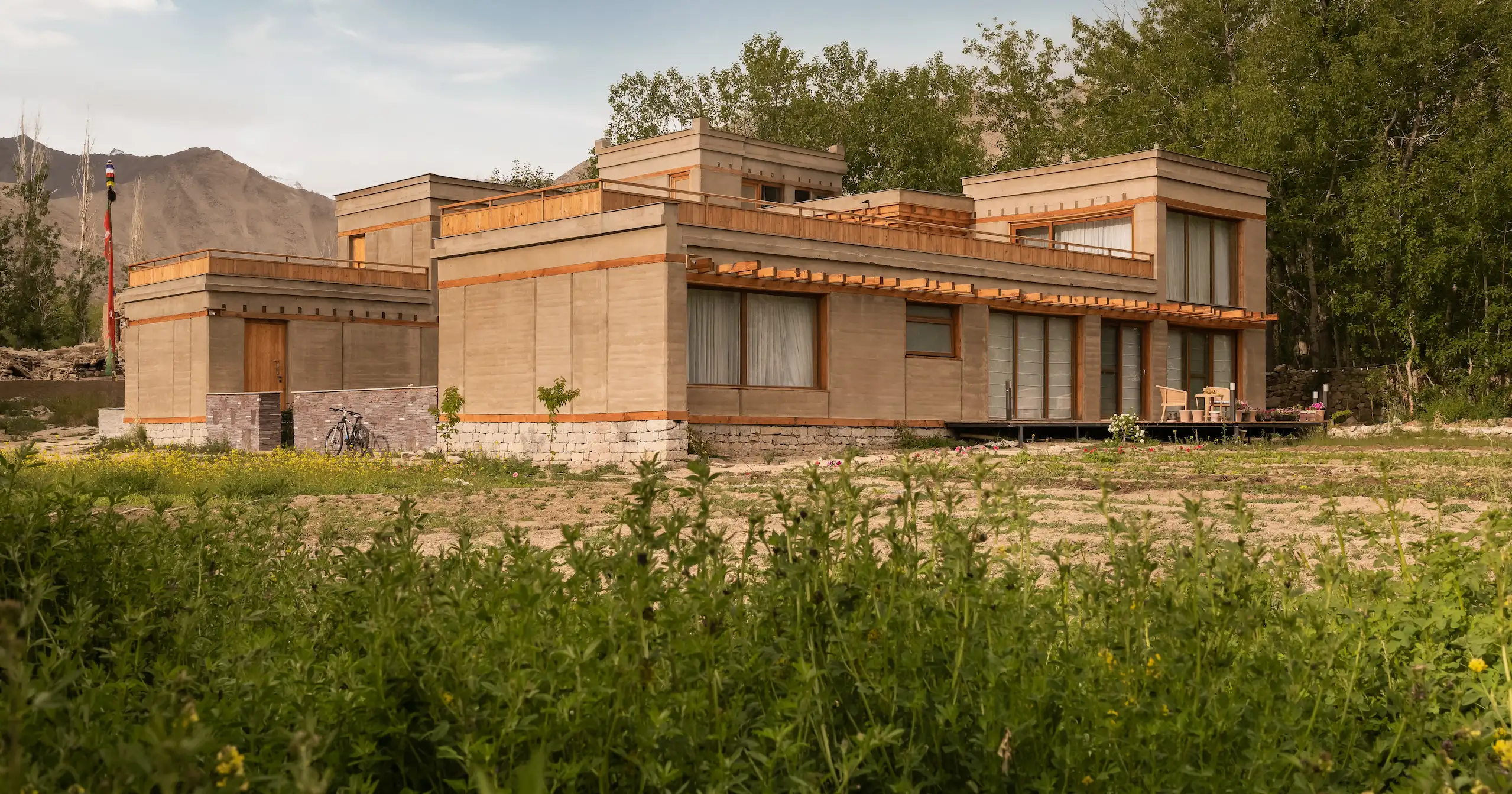
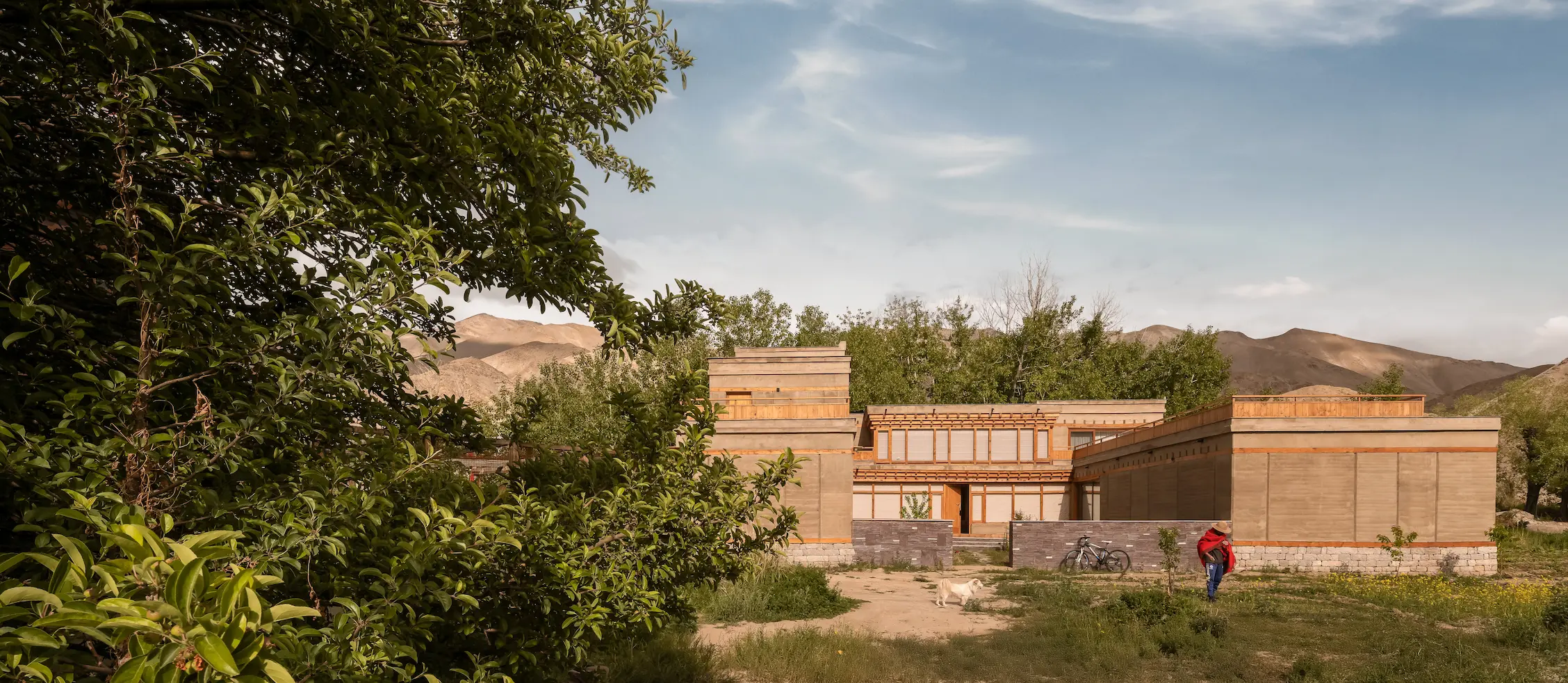
Our Exclusive partner property, Chemday House was built to answer a simple question: where should a wildlife lodge in Ladakh actually stand? The answer was Chemrey — close enough to Hemis National Park for a fast response to a Snow Leopard sighting, and sitting inside Eurasian Lynx territory of its own. What began as a family's centuries-old relationship with this land has become a wildlife lodge in Ladakh for Snow Leopard expedition and Eurasian Lynx expedition travellers, built in rammed earth and finished for comfort at altitude.

 Location
: A Wildlife Lodge Close to Hemis National Park
Set at the base of Wari La, Chemday House occupies an exceptional central location, offering easy access while remaining immersed in the wild, natural landscape of Wari La.
- —Hemis National Park — 20 mins
- —Leh — 44km — 1 hr
- —Nubra — 115km — 2.5 to 3 hrs via Warila
- —Pangong — 118km — 2.5hrs via Changla
- —Tsomoriri — 210km — 7 hrs
- —Manali — 400km — 11 hrs
- —Shey Palace — 29km — 30 mins
- —Nyemo Village — 72km — 1.5hrs
Chemrey VillageChemrey Village — Where Wari La Meets the Wild
Chemrey Village is beautifully situated along the scenic Wari La route, offering a peaceful Himalayan setting while remaining exceptionally well connected to Ladakh's major destinations. Located just around a 20-minute drive from Hemis National Park, it is ideally placed for wildlife enthusiasts and travellers seeking an immersive experience in the Trans-Himalayan landscape. The village is also close to the historic Chemrey Monastery and Takithok Monastery, offering easy access to two of Ladakh's most distinctive cultural landmarks. Its strategic location provides convenient access to Nubra Valley, Pangong Lake, Leh and the Manali–Leh Highway, making Chemrey a perfect base or stopover for exploring multiple circuits of Ladakh while staying away from the crowds.
 Our Story
A House Rooted in Time
Chemday House is rooted in a family story that has unfolded in Chemrey for centuries. Our ancestors, goldsmiths from Nepal, were invited by the then Ladakhi King in the 17th century to create the Buddha statue at Shey Palace. In return, they were offered land in any village of their choice. They chose Chemrey.
Over generations, the family became part of the land and its people, cultivating barley and trading across the high mountain passes, sometimes as far as Tibet. The family's earliest home, now partly in ruins, remains a quiet reminder of those times.
Around a century ago, our grandparents built the house that still stands beside Chemrey House today. Its old kitchen, once the heart of the household, and several original rooms preserve a glimpse of traditional Ladakhi life. One room retains its original stone-based pigments, with painted walls and carved timberwork, while other spaces are being carefully restored as heritage rooms.
In 2020, construction began on Chemrey House. Built as a continuation rather than a departure, its courtyards and earthen walls draw from traditional Ladakhi architecture, while its structure embraces contemporary living. Elements of the old house, including decorative wooden frameworks, have been carefully brought into the new.
Today, the old and new houses stand together—one preserving the memory of how life was lived, the other carrying that heritage forward.
Chemrey House is a story of craft, perseverance and a family's enduring relationship with the land.
 Project Overview
Chemday House — Project Overview: Earthy | Sustainable | Contemporary
Construction began in 2019 with a focus on energy efficiency, local materials, and a modern interpretation of traditional Ladakhi architecture.
The vision was to create an authentic Ladakhi living experience in a village setting, while remaining accessible to key tourist destinations like Pangong and Nubra.
The project was commissioned by Sandeep Bogadhi (Earthling Ladakh), a pioneer of rammed earth construction in the region.
Core Design Philosophy
- —Energy-efficient and climate-responsive design
- —Extensive use of locally sourced materials
- —Minimal environmental impact
- —Contemporary interpretation of traditional Ladakhi architecture
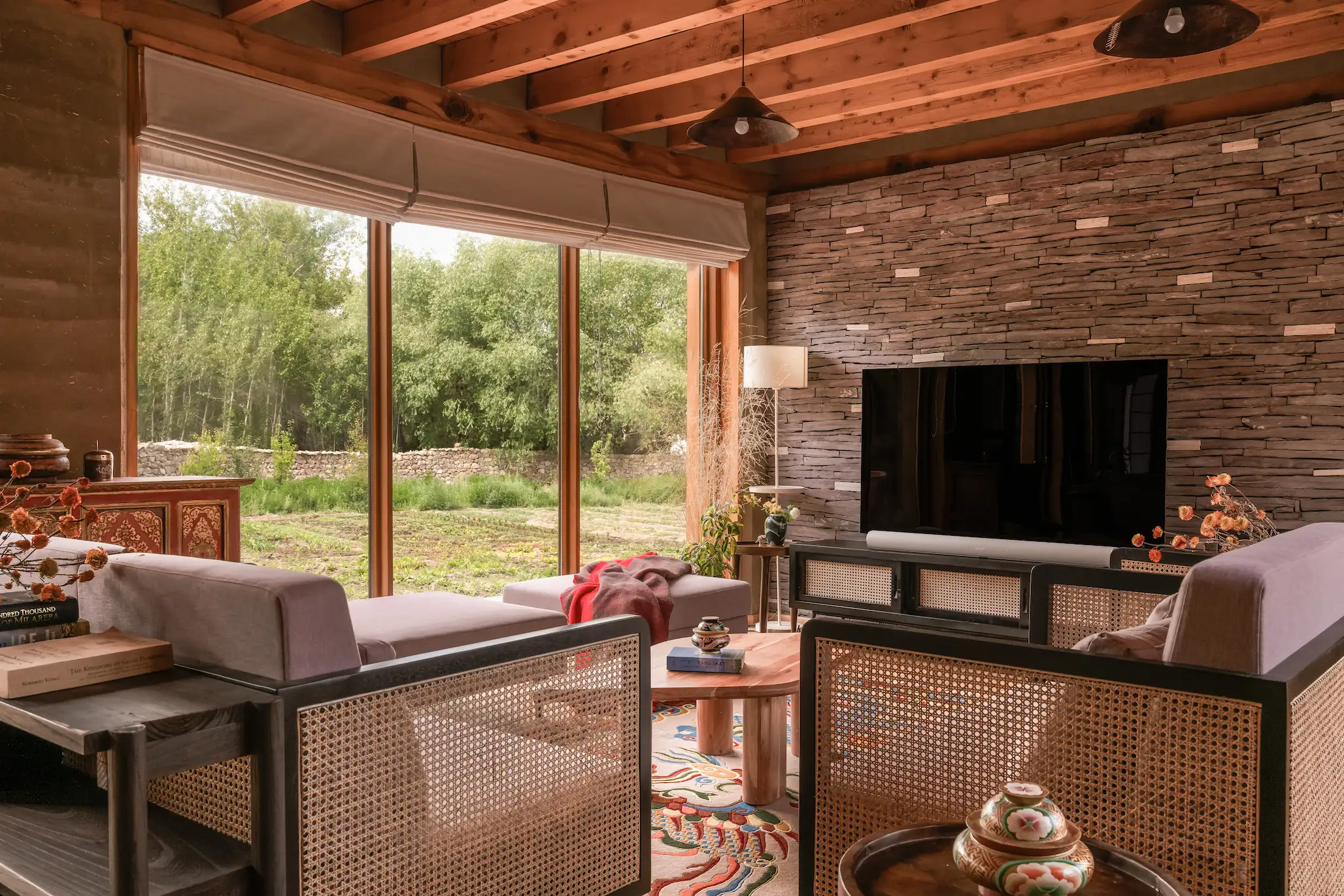
01 · Construction Techniques — Rammed Earth
- —Built using locally sourced mud mixed with lime
- —Thick load-bearing walls (~2 ft), with no cement and no lintel beams
Benefits:
- —Excellent thermal mass: retains heat in winter and keeps interiors cool in summer
- —Naturally regulates indoor temperature with minimal energy use
- —Highly sustainable due to negligible cement usage
02 · Passive Solar Design
- —South-facing orientation (~182°) for maximum winter sunlight
- —All bedrooms, kitchen, and living areas receive sunlight throughout the day
- —Double-glazed windows (6mm + 12mm air gap) improve insulation
Maintains indoor temperatures up to ~20°C warmer than outside.
03 · Local Material & Craftsmanship
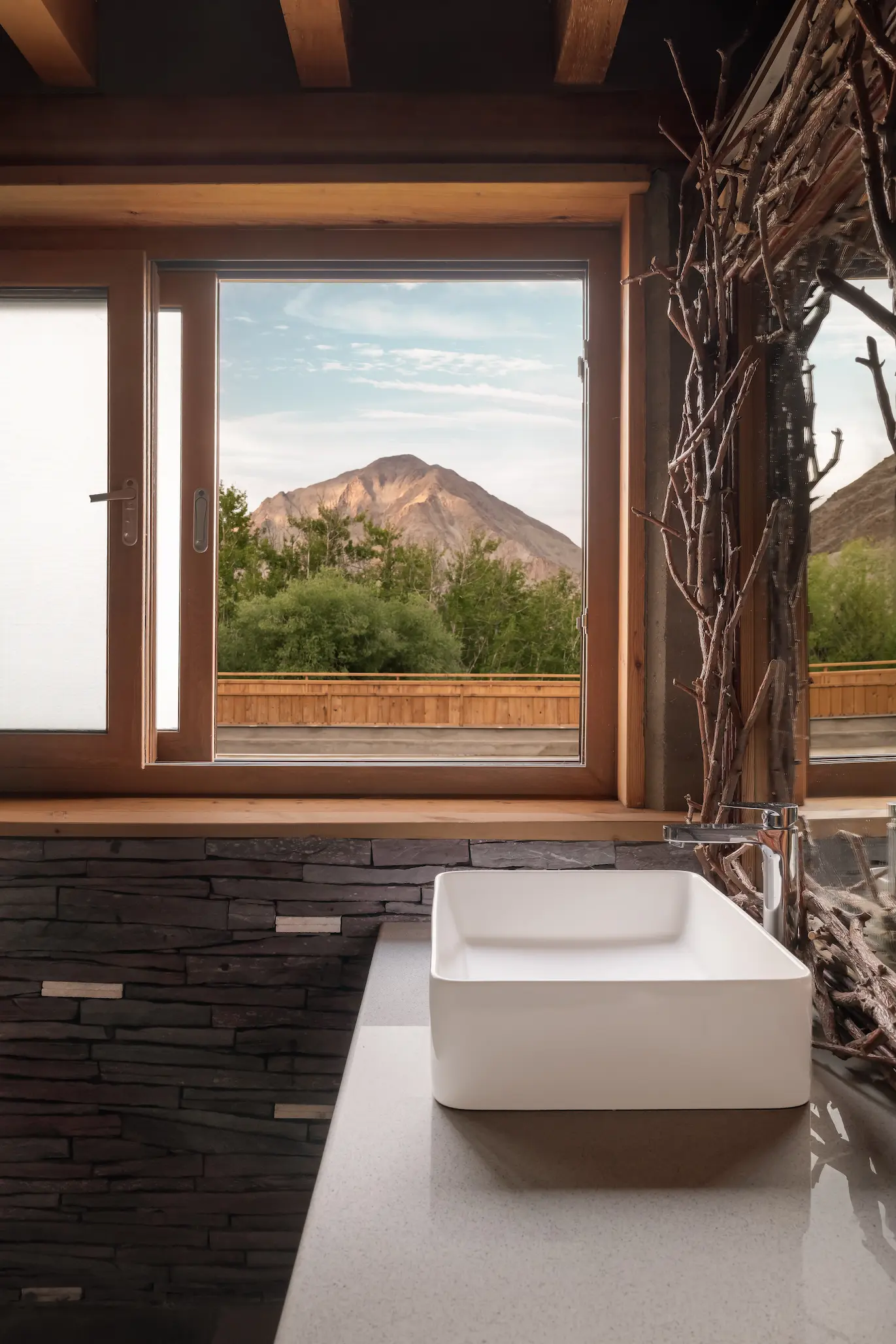
- —Use of Yamangs (local slate stone) instead of tiles
- —Natural elements like twigs incorporated into interior design
- —No synthetic paints on walls—natural mud finish blends with the environment
04 · Custom Furniture & Finishes
- —Custom furniture inspired by Japanese burnt wood techniques and George Nakashima designs
- —Designed and finished by a NIFT graduate
- —Use of water-based, low-VOC finishes for minimal chemical impact

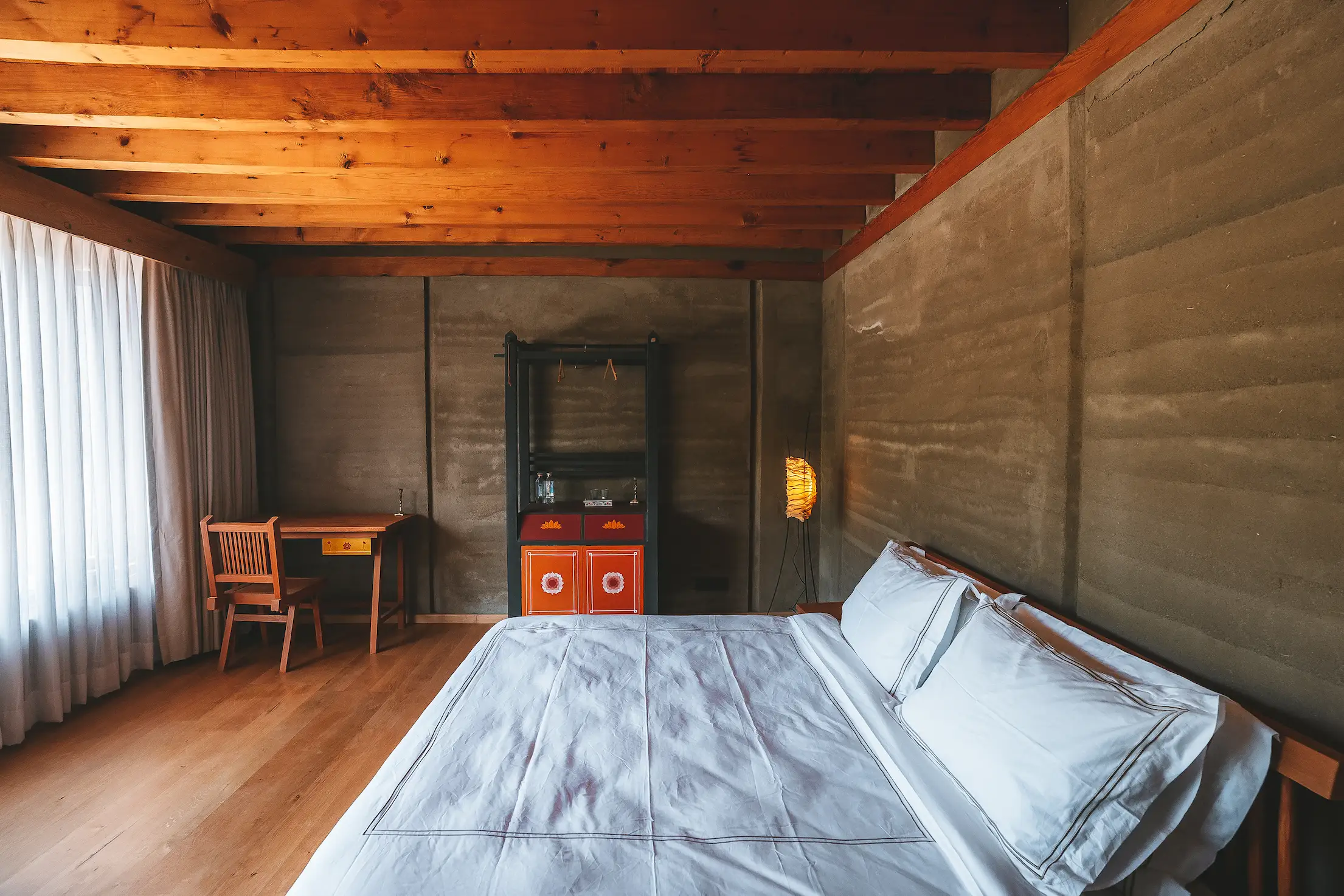 A Wildlife Lodge in Ladakh for Snow Leopard & Lynx Expeditions
Why Chemray House Is an Ideal Wildlife Base
The greatest advantage of Chemray House is its strategic location. Instead of being isolated from the main wildlife areas, the lodge sits in a position that provides access to both the Eurasian Lynx habitat around Chemray and the Snow Leopard landscapes towards Hemis National Park.
This allows our expedition team to make daily decisions based on the latest wildlife information. If the Lynx is active around Chemray, we can concentrate our efforts locally. If our spotters locate a Snow Leopard in the Shang or Hemis area, we can quickly drive towards the sighting. This combination of local Lynx habitat and nearby Snow Leopard territory makes Chemray House an exceptionally practical base for a multi-species high-altitude wildlife expedition.
A Unique Luxury Lodge Built with Traditional Ladakhi Earth Architecture
Chemray House is also special because it combines comfort, traditional Ladakhi architecture and a strong connection with the local environment.
The lodge is constructed using rammed earth, an ancient building technique traditionally used in Ladakh. Traditional Ladakhi homes were designed to work with the extreme mountain climate: their thick earthen walls help retain warmth during the cold winter months while providing natural insulation and keeping interiors cooler during the warmer summer days.
Chemray House brings this traditional architectural knowledge into a more comfortable lodge environment. It is a rare combination of authentic Ladakhi construction, modern comfort centrally heated and a strategically located wildlife base.
For photographers and wildlife enthusiasts, this makes Chemray House much more than an overnight stop. It becomes a comfortable base from which to explore one of Ladakh's most fascinating high-altitude wildlife landscapes.
 Rooms & Suites
The Warila Suite
The Warila Suite, our largest room at approximately 800 sq. ft., combines generous space with understated Ladakhi character. South-facing and naturally bright, it features central heating and cooling, UPVC Fenestra windows, custom furniture and lighting, a walk-in closet, and a Yamang stone bathroom. The suite opens onto a private balcony and a large terrace with a traditional shelkhang, a glass-enclosed sunroom designed to capture the warmth and light of the Himalayan sun.

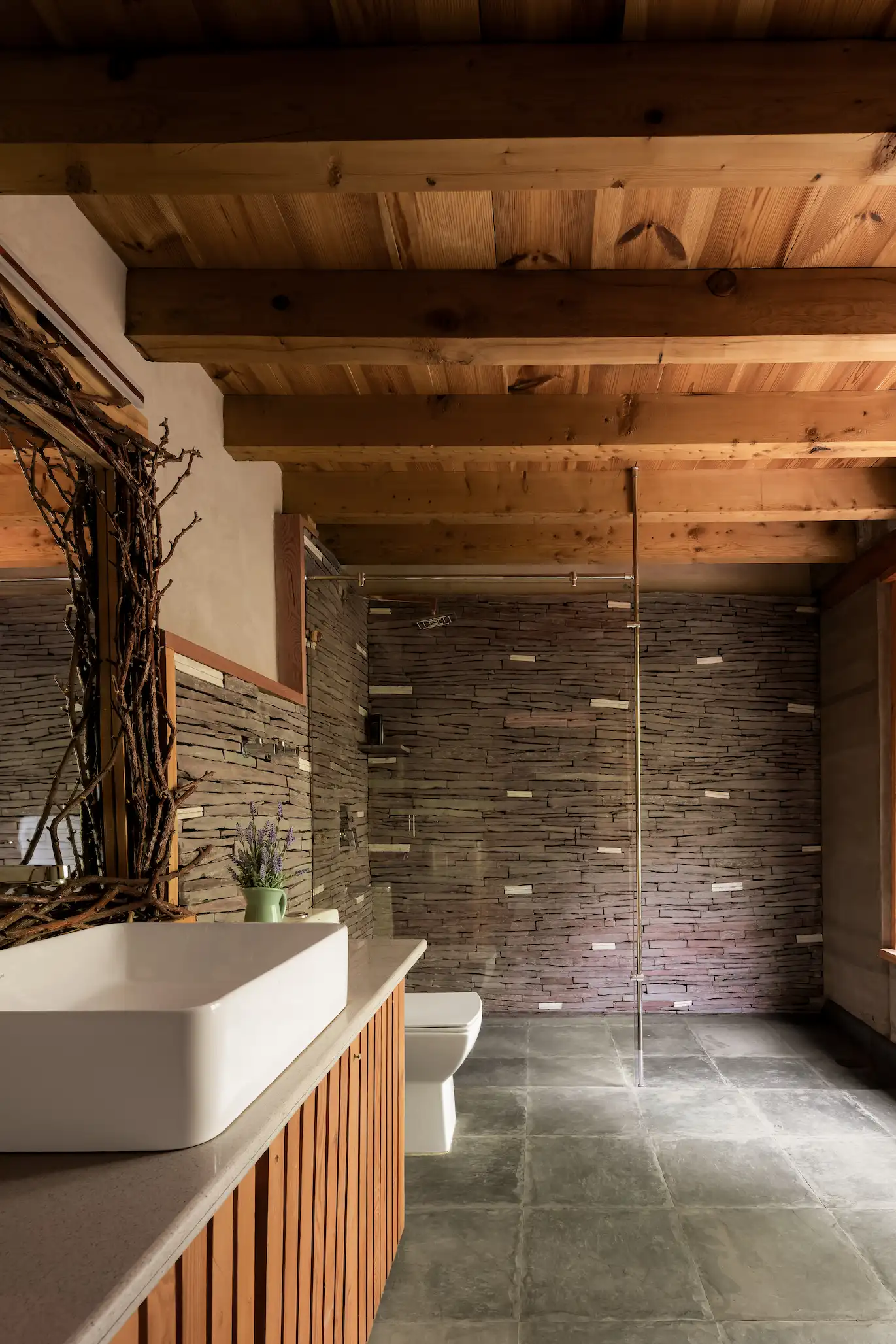

Three Individual Rooms, Named for Ladakh's Wildlife
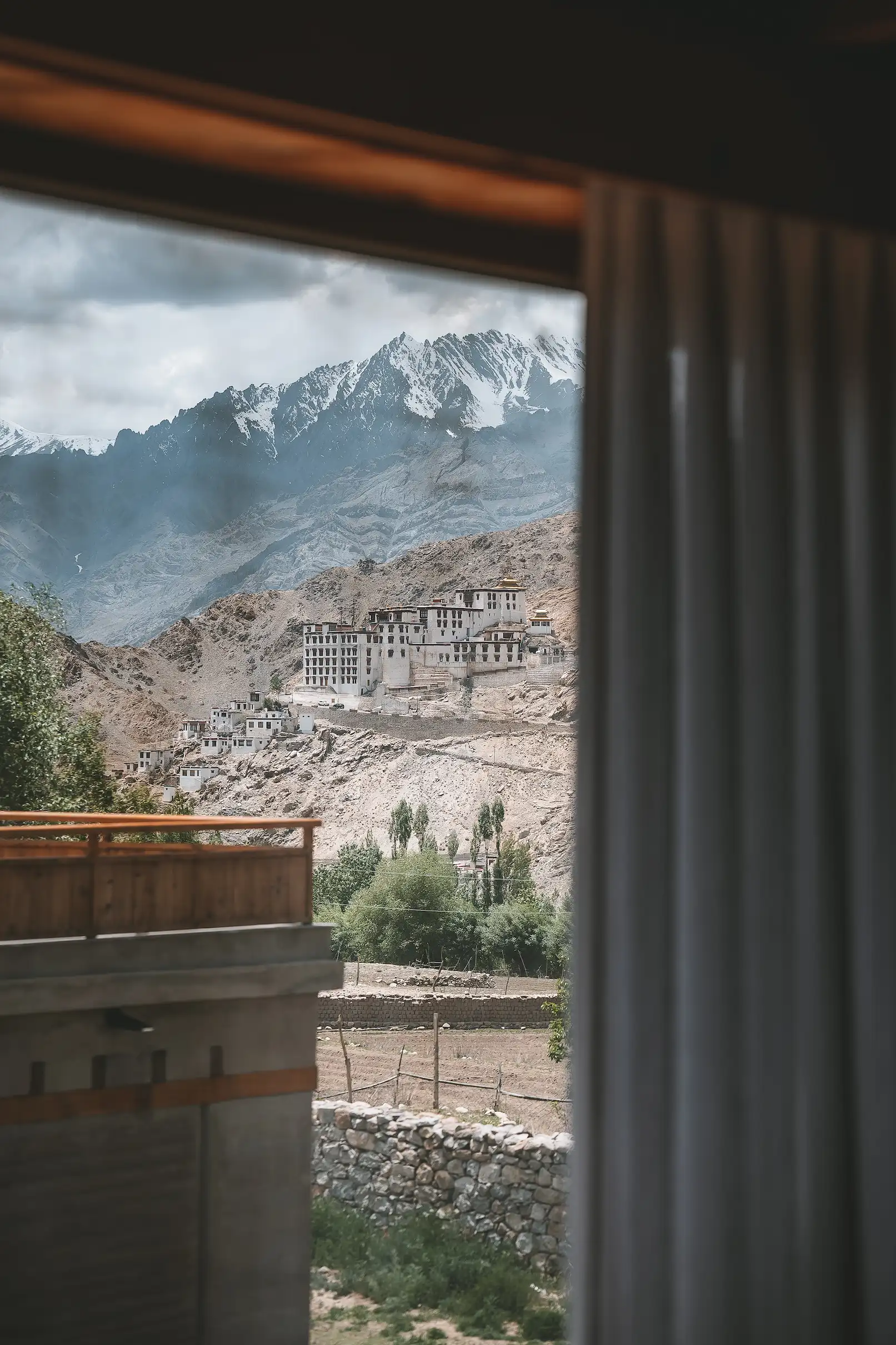
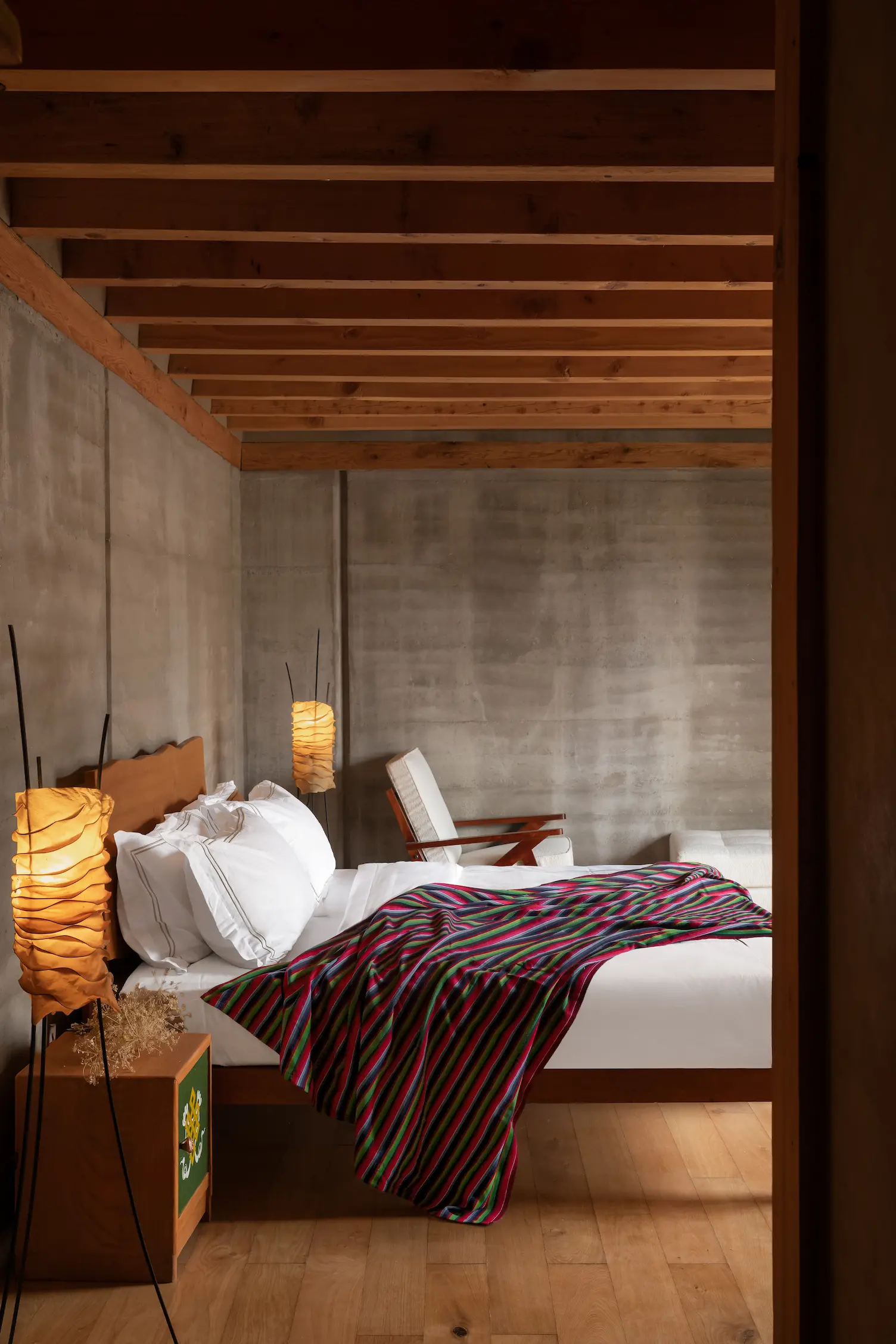
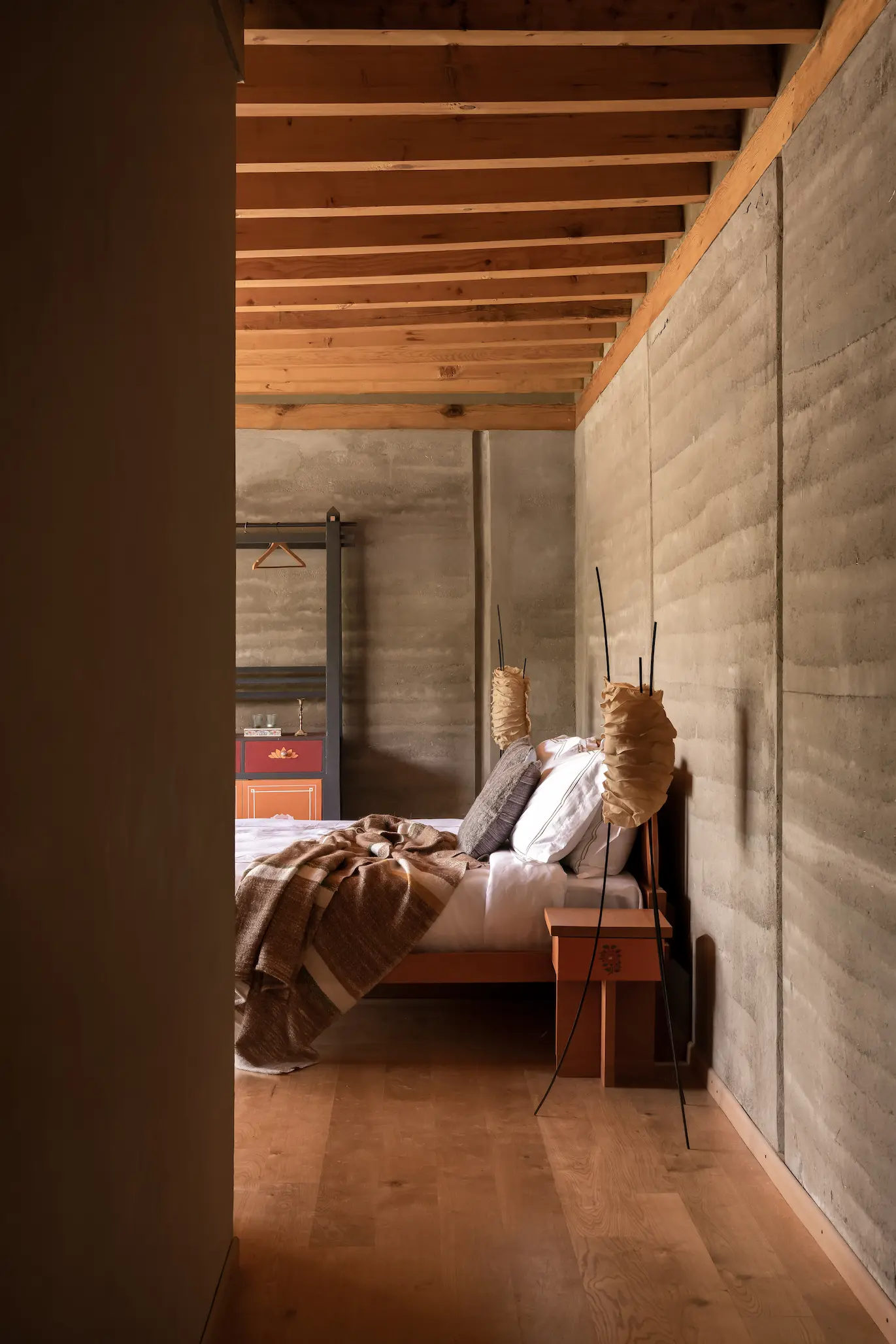
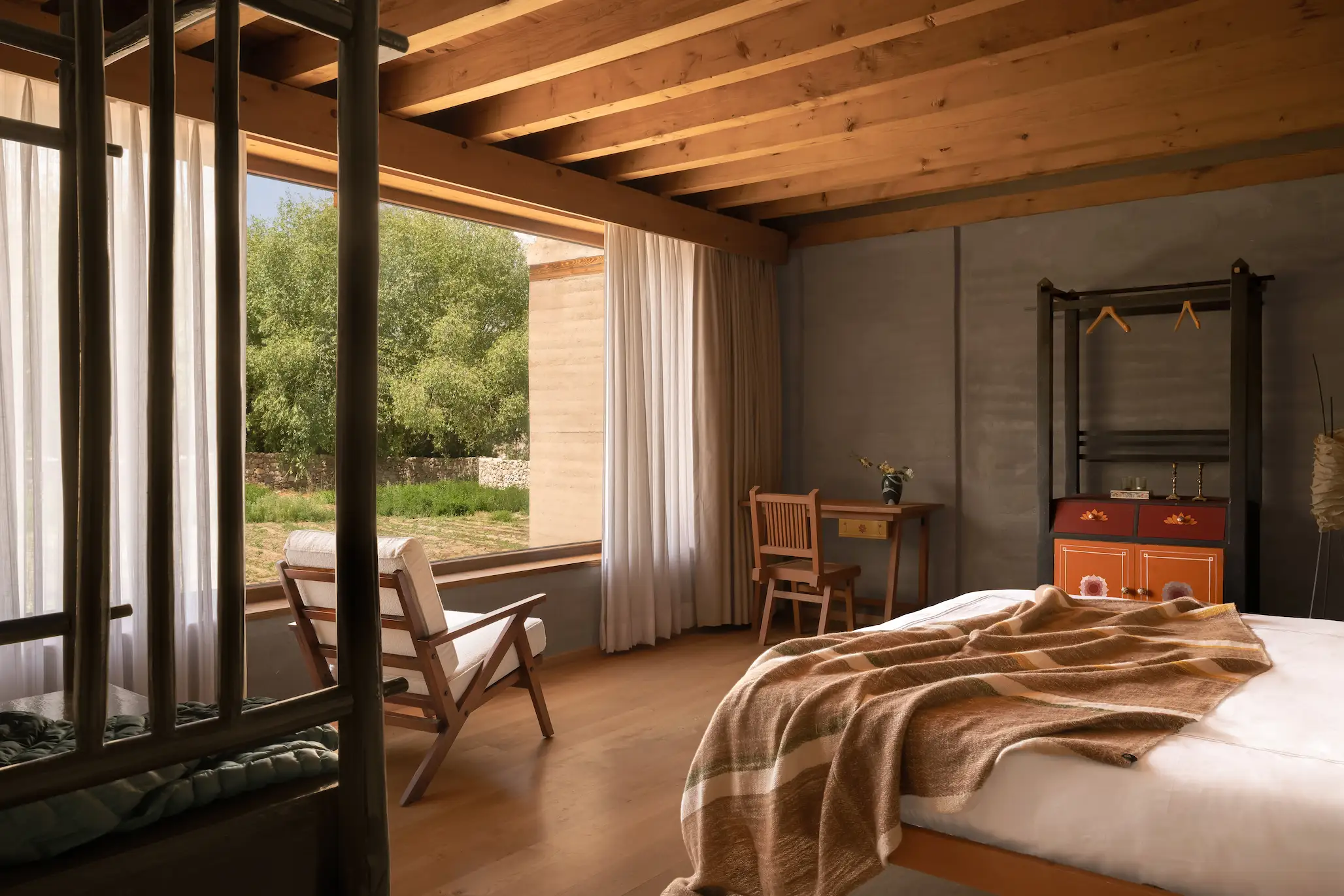
The Eurasian Lynx, Snow Leopard and Blue Sheep rooms each offer approximately 340 sq. ft. of thoughtfully designed space, with south-facing UPVC Fenestra windows framing views of the surrounding mountains and, in some rooms, Chemrey Monastery. Each room features central heating and cooling, custom-designed furniture, and a spacious bathroom finished in Yamang, a locally sourced stone that brings a distinctive sense of place to the interiors.
01 - Snow Leopard Room
Named for the ghost of the mountains it looks out toward
~340 sq. ft., south-facing with UPVC Fenestra windows and a bathroom finished in Yamang stone. Central heating and cooling, custom-designed furniture, and mountain views toward the Hemis National Park side of the range this wildlife lodge in Ladakh is built to serve.

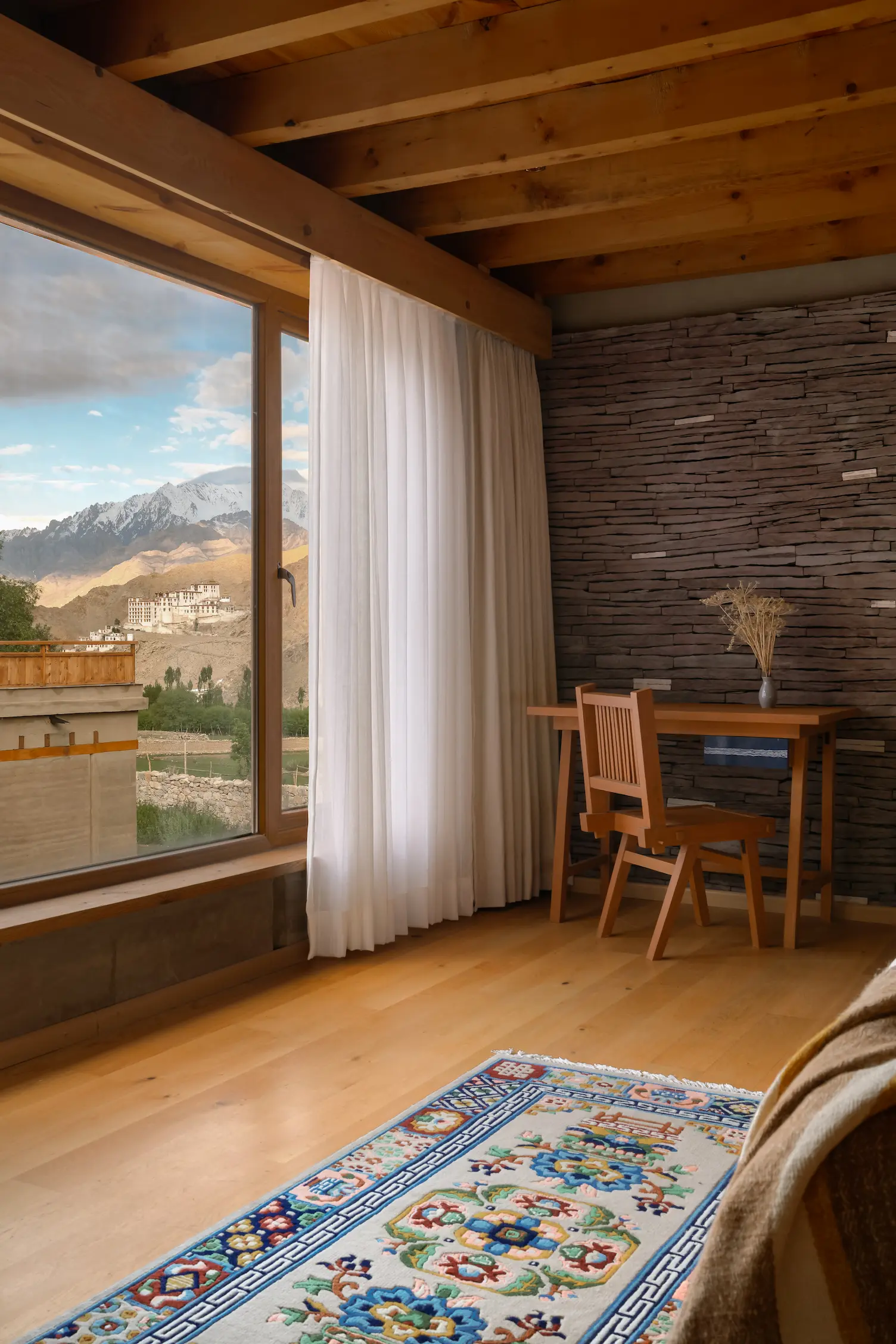
02 - Eurasian Lynx Room
Named for the secretive hunter of the Chemrey valley
~340 sq. ft., south-facing with UPVC Fenestra windows and a bathroom finished in Yamang stone. Some views take in Chemrey Monastery alongside the surrounding mountains — the same terrain trackers scan for Eurasian Lynx activity around Chemray.
03 - Blue Sheep Room
Named for the Bharal that share this landscape with predators
~340 sq. ft., south-facing with UPVC Fenestra windows and a bathroom finished in Yamang stone. Central heating and cooling and custom-designed furniture, matching the other two rooms in size and finish.
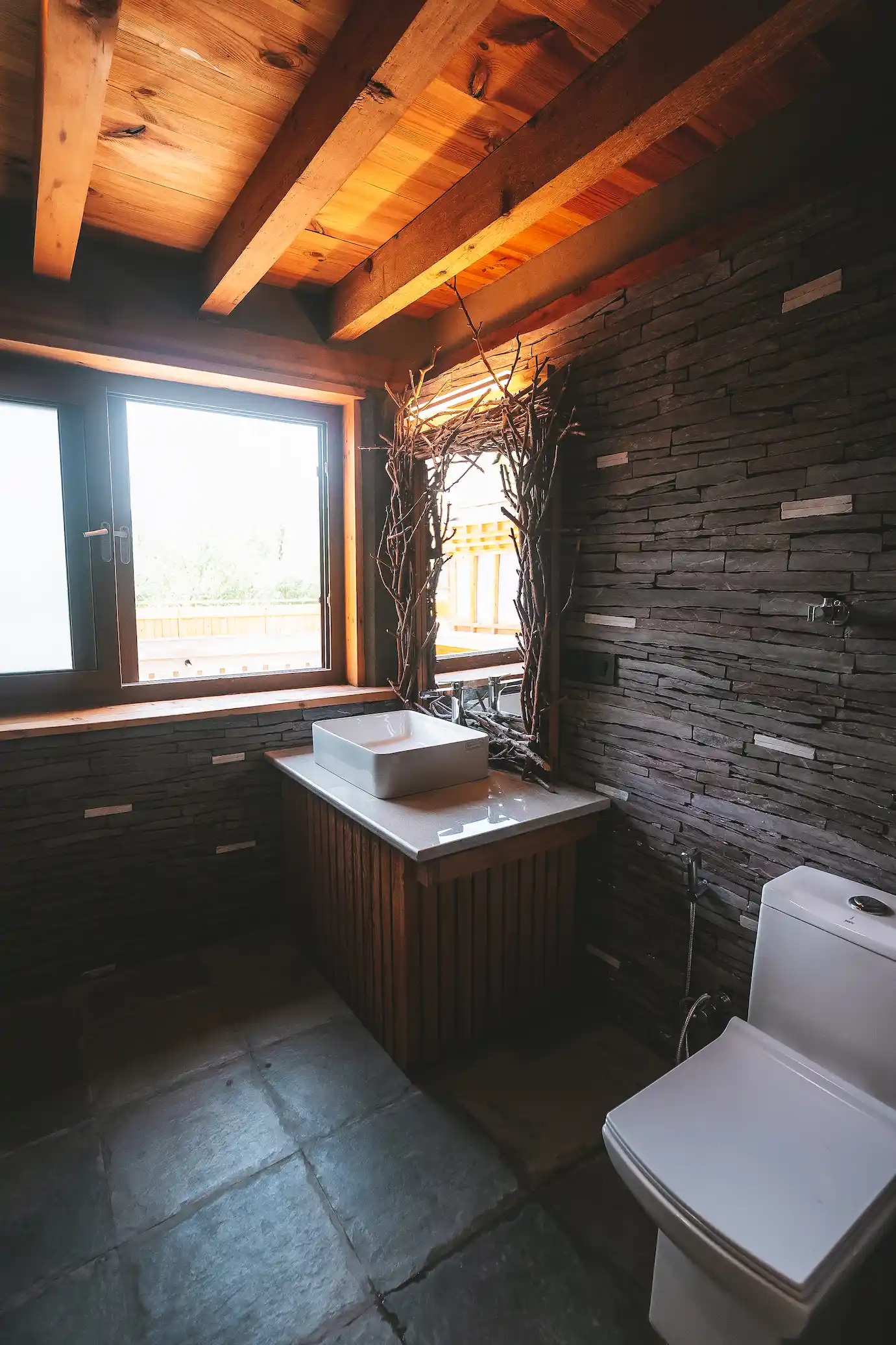


The Juniper
The Juniper is a more intimate space bringing together formal living, co-working and a small library collection. Custom-designed furniture, with a strong emphasis on George Nakashima-inspired Japanese woodworking, gives the space a distinctive warmth and sense of craftsmanship. Designed equally for conversation, reading and quiet work, The Juniper can comfortably accommodate up to 16 people.
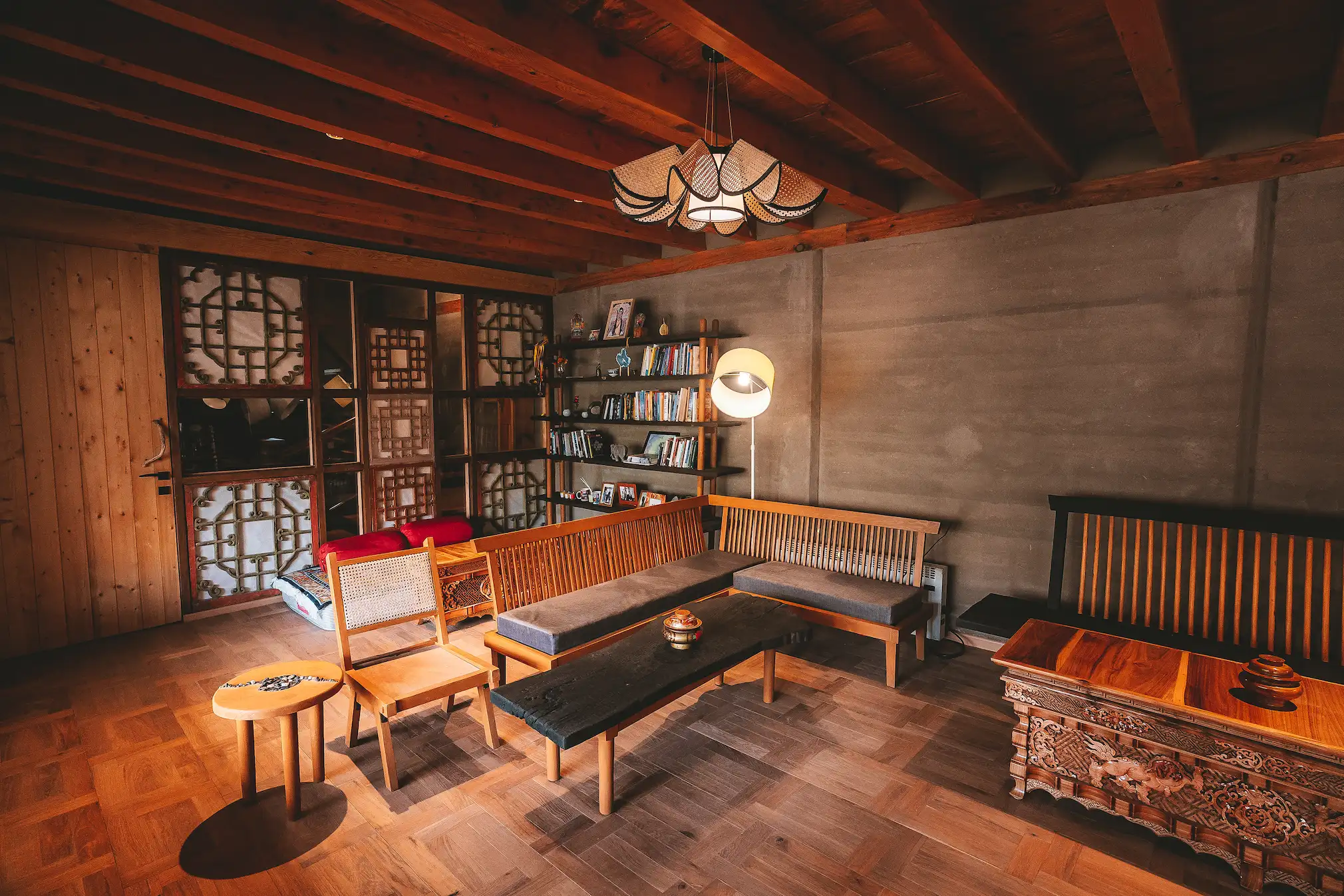
Garden Living
Garden Living is a warm, south-facing communal space centred around light, views and togetherness. Large, clear windows open onto the garden, while custom-built furniture and lighting create a relaxed, contemporary setting. A large TV screen makes it equally suited to evenings together, and the space can comfortably accommodate up to 12 people.
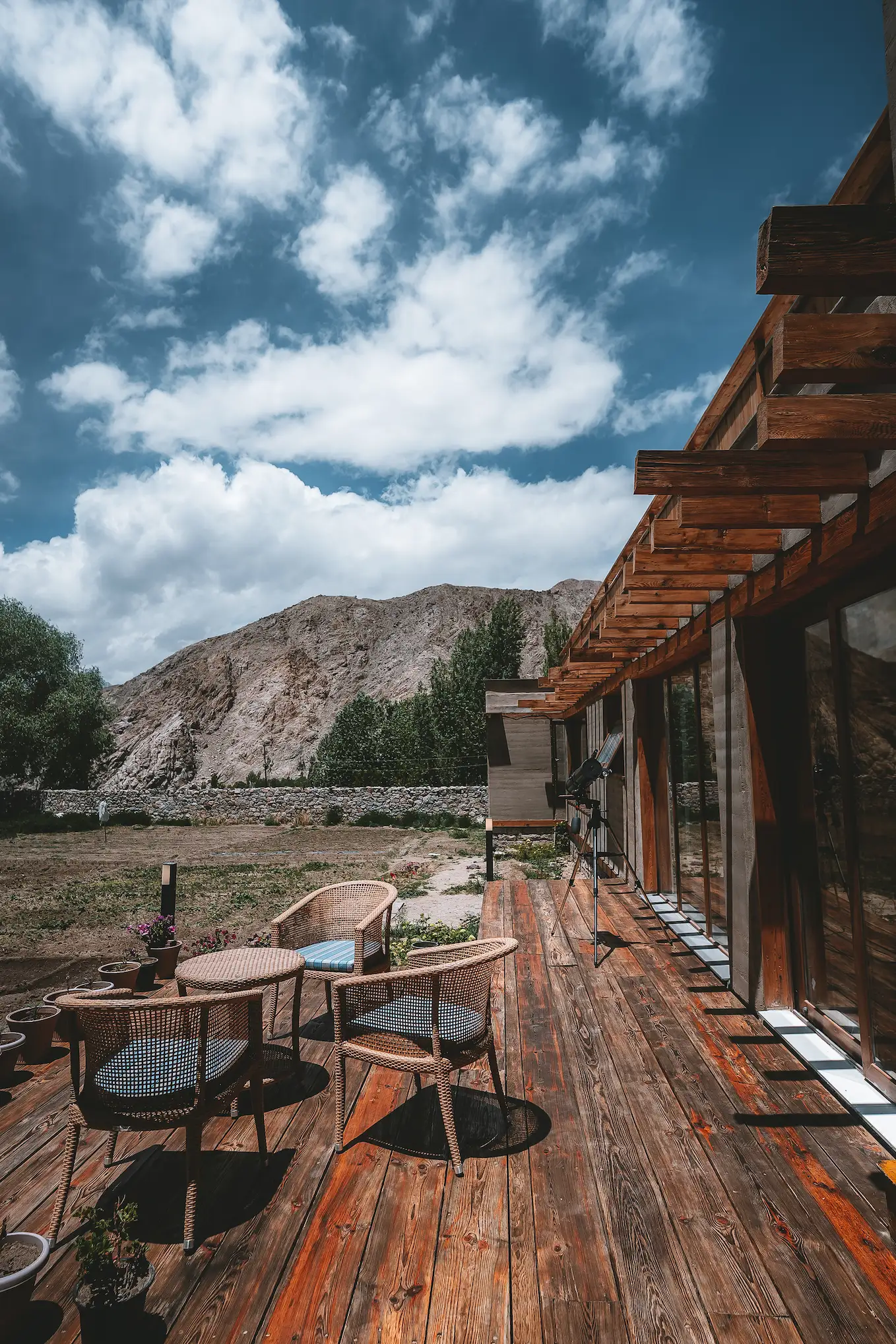
Accommodation
- —3 Rooms (320sqft) + 1 Master Suite (800sqft) — the rooms have Chemday Monastery view and Mountain View
- —5 Bathrooms
- —Open Kitchen + Living Area
- —Formal Living + Library
- —Pantry
The Ancestral HouseAncestral House of the Sergar Family
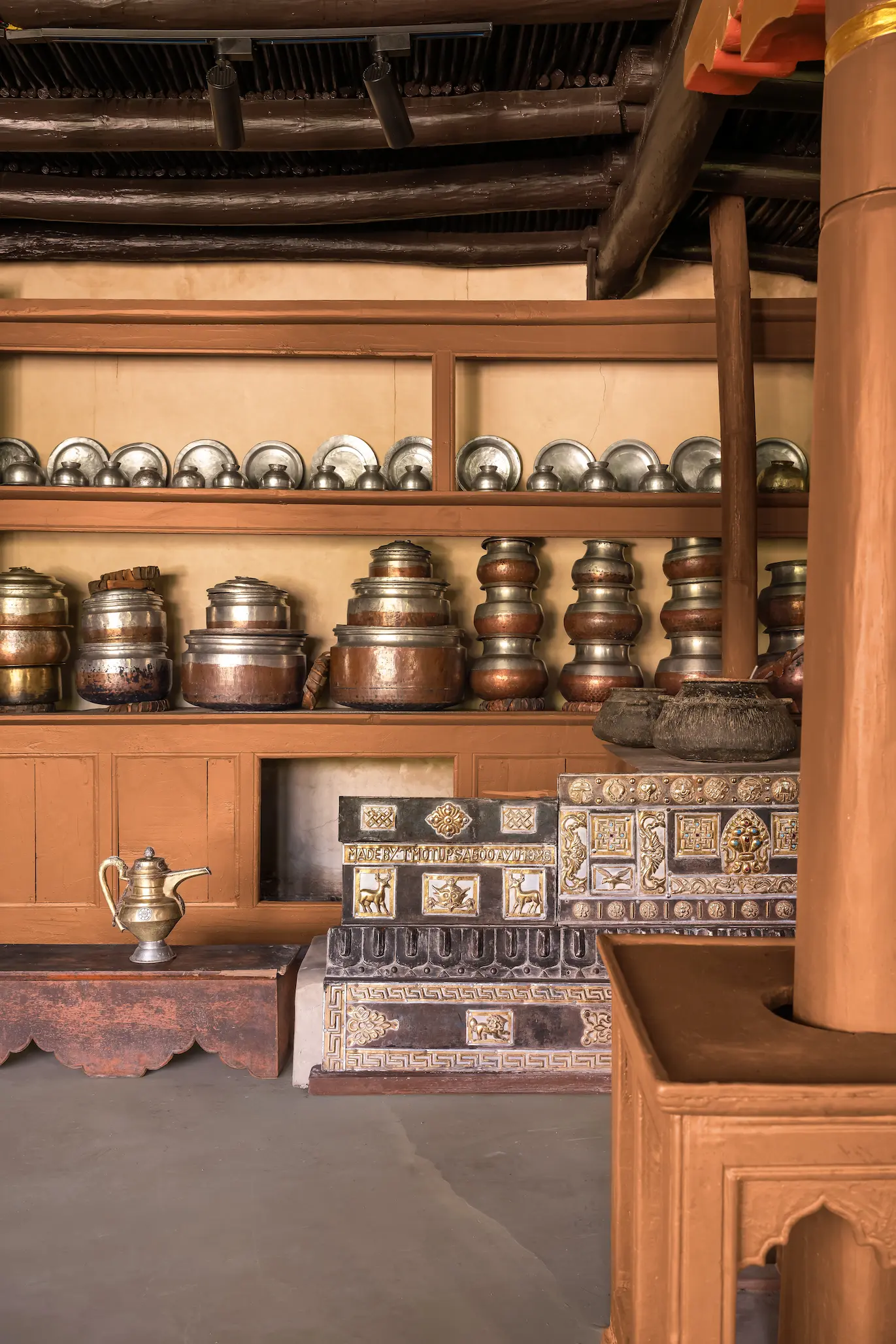
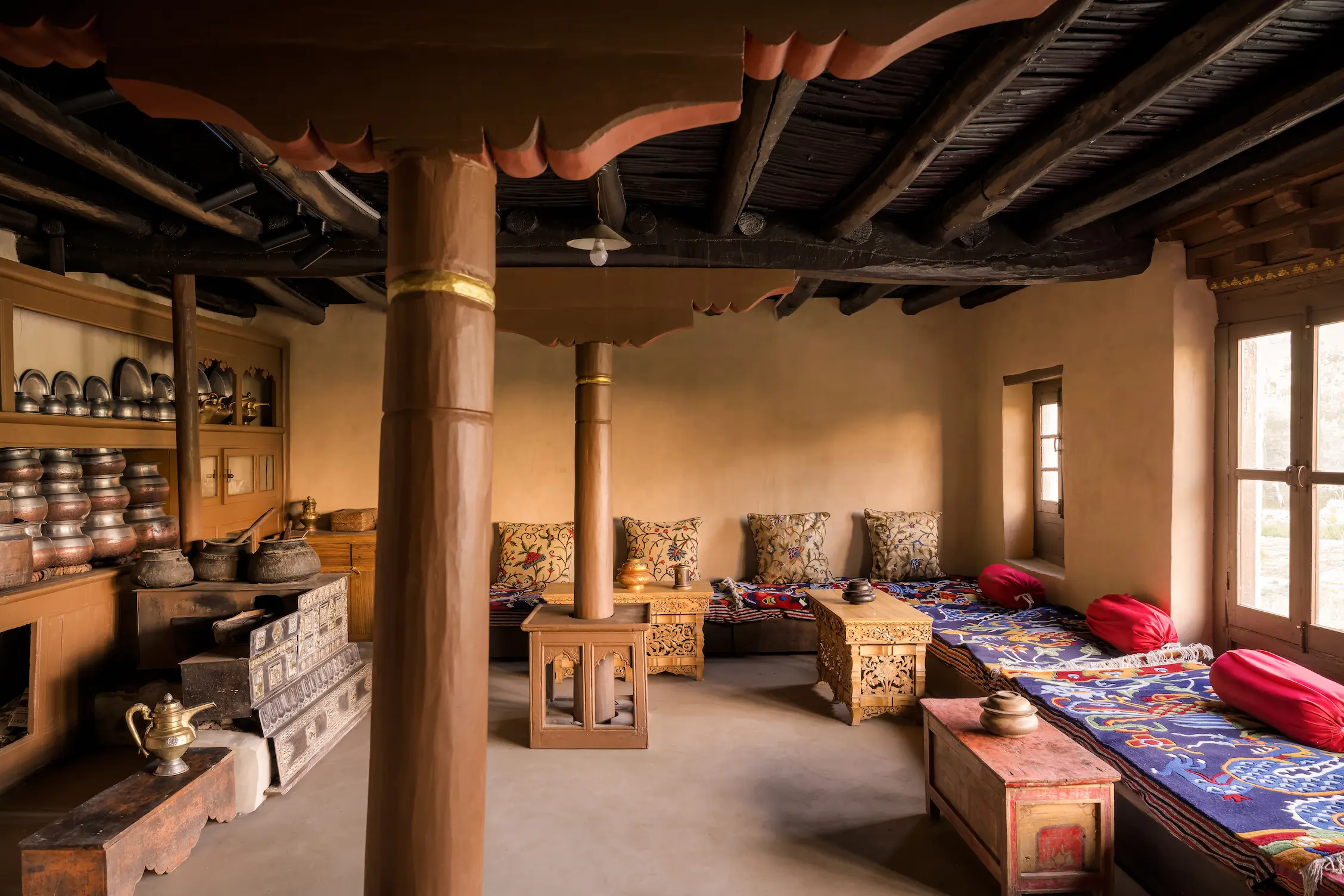
Around a century old, the ancestral house has been carefully conserved, with parts of the original structure rebuilt to preserve its character and memory. Today, three spaces are open to guests, each offering a glimpse into traditional Ladakhi life: the Chantsa, the old kitchen and former heart of the household; the Chongtse, a traditional guest room with walls and woodwork painted in natural stone-based pigments; and the Chotkhang, the family's prayer room. Together, these spaces offer an intimate connection to the way life was once lived in Chemrey.
Chotkhang · Chantsa · Chungtse — three preserved rooms of the Sergar family's ancestral home, open to guests of Chemday House.
Chotkhang — The Prayer Room
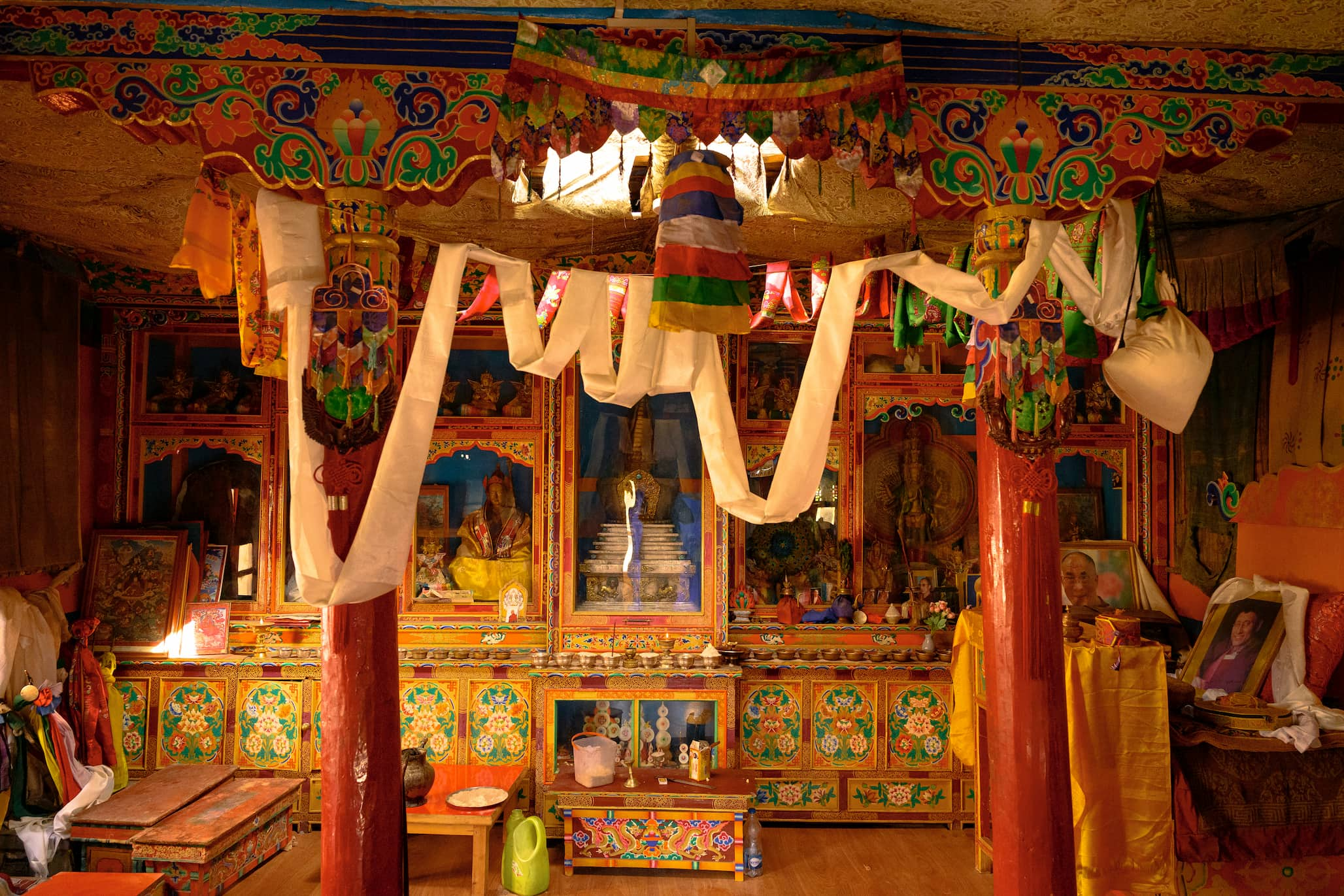
The Chotkang, or prayer room, is the spiritual heart of the ancestral house and traditionally its most sacred space. It houses sacred statues, including Guru Rinpoche and the household protector, and is where the family gathers for daily and annual prayers and important religious ceremonies.
The Chotkang at Chemrey House also preserves thangkas believed to be over two to three centuries old, painted using traditional stone-based pigments. Together with the sacred objects and original craftsmanship of the room, they offer a rare glimpse into the spiritual and artistic traditions that have been passed down through generations.
Chantsa — The Traditional Kitchen
Around a century old, the ancestral house has been carefully conserved, with parts of the original structure rebuilt to preserve its character and memory. Today, three spaces are open to guests, each offering a glimpse into traditional Ladakhi life: the Chantsa, the old kitchen and former heart of the household; the Chongtse, a traditional guest room with walls and woodwork painted in natural stone-based pigments; and the Chotkhang, the family's prayer room. Together, these spaces offer an intimate connection to the way life was once lived in Chemrey.
The Chungtse — The Traditional Guest Room
The Chungtse, or traditional guest room, was the room reserved for welcoming important guests, particularly during family gatherings, celebrations and ceremonies. It was a space of hospitality and honour, where visitors were received and hosted in the traditional manner.
The Chungse at Chemrey House is especially significant for its craftsmanship. Its walls and intricate woodwork are adorned with traditional painted decoration, created using natural stone-based pigments—an age-old technique that gives the room its distinctive depth and colour. Carefully preserved, the room offers a glimpse into the artistry of traditional Ladakhi homes, where architecture, craftsmanship and hospitality were deeply intertwined.
 Dining
 at Chemday House
Curated Culinary Experience
- —Fresh, locally sourced ingredients
- —Ladakhi flavours with familiar comfort cuisine
- —Warm, nourishing meals for high-altitude conditions
Dining Moments
- —Scenic outdoor lunches (Warila / Tokpo)
- —Hot meals after wildlife excursions
- —Simple, authentic local experiences

Base your expedition at Chemday House.
A wildlife lodge in Ladakh for Snow Leopard and Eurasian Lynx expeditions, close to Hemis National Park — managed and organised by Elite Expedition India.
Travel with purpose into some of the world’s last wild places, where nature remains raw and untamed. Every expedition is thoughtfully designed to respect wildlife, support local communities, and contribute to conservation—ensuring your journey leaves a positive footprint long after the adventure ends.